Blog

rebackoffice

Use It or Lose It: 3 Ways Commercial Tenants Lose Their Tenant Improvement Allowance


For many commercial tenants, securing a generous TI allowance is the crowning achievement of a successful commercial lease negotiation. On paper, it represents the vital capital necessary to transform a bare, concrete shell into a vibrant, functional workspace tailored to your exact business needs. It feels like a massive win a blank check from the landlord to build out your dream office, retail storefront, or industrial facility.

Tenant improvement allowances are a common feature in commercial real estate leases, helping property owners attract tenants and remain competitive in varying market conditions.

However, the harsh reality of commercial real estate is much more complex. The path from an “approved budget” on a signed lease to a “received check” in your company’s bank account is fraught with administrative hurdles, legal stipulations, and ticking clocks. Experienced brokers can help new tenants navigate the complexities of negotiating improvement allowances.

A TI allowance is rarely cash handed over upfront. It is almost always a reimbursement. And unfortunately, landlords do not make the reimbursement process easy. Landlords have their own financial interests, tax liabilities, and investor reports to manage. If a tenant fails to jump through the exact administrative hoops outlined in the lease, the landlord is often legally within their rights to withhold the funds.

This results in millions of dollars of lost TI funds every year. Capital that should have paid for flooring, HVAC systems, and architectural framing ends up staying in the landlord’s pocket, leaving the tenant to absorb devastating, unexpected out-of-pocket costs.

If you are a tenant or a tenant representative, you must understand the risks of TI management. In this guide, we will break down the top three tenant improvement mistakes that lead to lost capital, and how you can safeguard your allowance. Understanding how TI allowances impact potential tenants and lease negotiations is crucial for both tenants and property owners.

Types of Leasehold Improvements

Leasehold improvements often referred to as tenant improvements are the custom modifications made to a leased commercial space to meet the unique operational needs of a particular tenant. These improvements are a central part of most commercial real estate transactions and can significantly impact the value and functionality of both the leased space and the overall property.

Mistake #1: Ignoring the Expiration Clock (Missing the “Outside Date”)

The single most common way commercial tenants forfeit their improvement funds is by falling victim to TI allowance expiration.

When negotiating a lease, tenants are hyper-focused on the dollar amount per square foot. However, several key factors such as the lease term and whether the agreement involves longer term leases can influence the structure and expiration of the TI allowance. Buried deep within the work letter or construction exhibit of the lease agreement is a crucial timeline. Almost every commercial lease includes a strict deadline by which the tenant must complete construction and submit all required documentation to claim their reimbursement.

This deadline is legally referred to as the Outside Date.

What is an Outside Date in a Lease Agreement?

An Outside Date (or Sunset Date) is the final, non-negotiable deadline written into a commercial lease by which a tenant must draw down their entire TI allowance. If the tenant has not requested reimbursement with all proper documentation by 11:59 PM on this exact date, any remaining allowance simply vanishes.

Why Landlords Enforce the Outside Date

Landlords don’t implement outside dates purely out of malice; it is an accounting necessity. Landlords need to close their books for the fiscal year. When the landlord owns the improvements, timely accounting and depreciation are especially important for their financial records. They cannot carry an unspent, contingent liability (your TI allowance) on their balance sheets indefinitely. The outside date provides them with financial certainty. If you miss the date, the landlord writes the liability off their books, and your right to those funds is permanently revoked.

The Reality of Construction Delays

The problem is that commercial construction rarely goes exactly according to schedule. What seems like a generous six-month or twelve-month window can evaporate rapidly due to factors completely out of the tenant’s control:

  • Permitting Delays: Municipalities and local government offices are notoriously backlogged. Waiting for a building permit can eat up months of your timeline before a hammer ever swings.
  • Supply Chain Disruptions: Delays in shipping critical materials like specialized HVAC rooftop units, custom glass, or specific flooring can halt a project for weeks.
  • Contractor Shortages: High demand for skilled commercial labor can lead to scheduling conflicts with your general contractor.
  • Change Orders: Any changes to the initial architectural plans will require new approvals from the landlord, further pausing the clock.

Additionally, unforeseen issues in the construction process can further complicate meeting the Outside Date.

If your construction is delayed, your outside date usually does not change. The clock keeps ticking.

How to Prevent This Mistake

To protect yourself from TI allowance expiration, you must negotiate a realistic outside date during the initial commercial lease negotiation. Factor in buffer time for permitting and supply chain issues. More importantly, once the lease is signed, you must actively track this deadline. Relying on a calendar alert set by an office manager six months ago is a recipe for disaster.

Mistake #2: Underestimating the Documentation Burden

Let’s assume your construction finishes on time. You breathe a sigh of relief, assuming the hard part is over. You send an email to the property manager asking for your check.

Instead of a check, you receive a massive checklist.

The second major trap that costs tenants their TI funds is the crushing Documentation Burden. Because a TI allowance is a reimbursement for property improvements, the landlord requires absolute, legally binding proof that the work was completed to code, that it matches the approved plans, and most importantly, that all contractors have been paid. All expenses related to the tenant improvements must be thoroughly documented to qualify for reimbursement.

Landlords demand a mountain of paperwork before releasing a single cent. Failing to produce even one of these documents in the correct format can stall your reimbursement indefinitely or push you past your outside date.

The Essential TI Reimbursement Checklist

While every lease is different, tenants are generally required to provide a highly specific package of documents, known as a draw request. This package typically includes:

  1. Itemized Invoices: A simple bill from your general contractor will not suffice. Landlords require deeply itemized invoices broken down by trade (electrical, plumbing, carpentry, including upgrades to electrical systems as part of the tenant improvements). They want to see exactly how many hours were billed and what materials were purchased.
  2. Unconditional Lien Waivers: This is arguably the most critical and difficult document to secure. When you hire a contractor, they (and their subcontractors) have the right to place a mechanic’s lien on the landlord’s building if they aren’t paid. Before reimbursing you, the landlord demands signed, unconditional lien waivers from your general contractor and every single subcontractor and supplier proving they have been paid in full and waive their right to sue the landlord. Chasing down dozens of subcontractors for these legal signatures is a logistical nightmare.
  3. Certificate of Occupancy (C of O): Issued by the local government, this proves the space is legally habitable and compliant with all building and fire codes.
  4. Architect’s Certificate of Substantial Completion (AIA Document G704): A formal sign-off from your architect stating that the space was built exactly according to the plans the landlord originally approved.
  5. Proof of Payment: Canceled checks, wire transfer receipts, or bank statements proving that you, the tenant, have actually paid the general contractor out of your own pocket first.

The Cost of Manual Tracking

For a tenant trying to run a business, managing this paperwork manually via spreadsheets and messy email threads is incredibly risky. If you submit a lien waiver with a minor typo, the landlord’s legal team will reject the entire draw request. If you lose a critical invoice, that line item won’t be reimbursed. The administrative burden becomes so heavy that many tenants eventually give up fighting for the last 10% to 20% of their allowance, writing it off as a loss.

Mistake #3: Falling into the Reimbursable Gap

The third way commercial tenants lose money is by fundamentally misinterpreting what the landlord will actually pay for. This creates the Reimbursable Gap the painful financial space between what you thought your TI allowance covered and what the landlord legally approves. Many landlords typically calculate the improvement allowance as a lump sum or as a dollar amount per square foot, depending on property types such as office, retail space, or industrial leased property.

During the excitement of designing a new space, tenants often assume the TI allowance is a general fund that can be applied to anything related to opening their new office or store. The money provided by the landlord is usually restricted to specific improvements within the rented space, and landlords agree to cover only certain costs incurred during the renovation project. This is a massive, costly misconception.

Hard Costs vs. Soft Costs

Commercial leases strictly define what types of expenses qualify for TI reimbursement. These are generally divided into hard costs and soft costs.

  • Hard Costs: These are the physical, permanent improvements made to the landlord’s real property. This includes things like framing, drywall, installing HVAC ductwork, permanently installed lighting, flooring, plumbing, and life-safety systems (sprinklers). Landlords love hard costs because they add permanent value to their building.
  • Soft Costs: These are the intangible costs associated with the project. This includes architectural fees, engineering fees, permitting costs, legal fees, and construction management fees.
  • FF&E (Furniture, Fixtures, and Equipment): These are items that are not permanently attached to the building and will be taken by the tenant when they move out. This includes desks, chairs, computers, specialized manufacturing equipment, televisions, and artwork.

The Trap

Most standard commercial leases explicitly state that the TI allowance can only be used for Hard Costs.

If a tenant doesn’t read the fine print, they might spend $50,000 of their $200,000 allowance on architectural fees, high-end removable cubicles, and specialized data cabling for their IT room. When they submit these invoices for reimbursement, the landlord will flatly reject them. The tenant is suddenly left with a $50,000 out-of-pocket deficit at the end of a stressful project.

Even within hard costs, landlords can be incredibly picky. For example, they may agree to cover standard HVAC distribution, but if you run a restaurant and need a highly specialized, heavy-duty ventilation hood, the landlord may argue that this is a tenant-specific requirement and refuse to reimburse it.

To avoid the Reimbursable Gap, tenants must have an airtight understanding of permitted uses during the commercial lease negotiation, and they must audit every single invoice against the lease language before submitting it to the landlord.

The Solution: Safeguard Your Capital with Professional Lease Administration

The reality of TI management for tenants involves layers of legal, financial, and logistical complexity. Tenant improvement allowance accounting can be complex, with important tax implications and potential tax deductions for both tenants and landlords, including considerations around tenant improvements tax, depreciation, and whether improvements are tax deductible.

To ensure that no capital is left on the table, modern commercial tenants and their representatives are abandoning manual spreadsheets and turning to professional lease administration with automated reporting tools. Property managers play a crucial role in overseeing tenant improvements and ensuring compliance with accounting and tax requirements, including determining whether tenant improvements are tax deductible or subject to depreciation as tenant improvements tax.

About RE BackOffice

At RE BackOffice, we specialize in helping commercial tenants navigate these exact complexities. We understand that a commercial lease is not a document you sign and file away; it is a living financial agreement that requires active, precise management.

By leveraging expert lease administration paired with state-of-the-art automated abstraction tools, RE BackOffice transforms the chaotic, high-risk process of TI reimbursement into a seamless, controlled workflow.

Your TI allowance is your money. It is the capital you negotiated to build the future of your business. Don’t let administrative errors, missed deadlines, or paperwork fatigue cost you thousands of dollars.

Visit rebolease.com today to learn more!

Frequently Asked Questions

What happens if my TI allowance expires?

If you miss the “outside date” or expiration date outlined in your commercial lease agreement, you will typically forfeit any remaining, unclaimed Tenant Improvement funds. The landlord is no longer legally obligated to reimburse you for construction costs, and you will have to pay for the remaining fit-out out of your own pocket.

What is the difference between hard costs and soft costs in a TI allowance?

Hard costs refer to physical, permanent improvements to the building’s infrastructure, such as drywall, flooring, HVAC ductwork, and plumbing. Soft costs refer to intangible expenses like architectural designs, engineering fees, and city permits. Most standard TI allowances only cover hard costs, though this can be altered during lease negotiation.

Why do landlords require unconditional lien waivers for TI reimbursement?

Landlords require unconditional lien waivers to protect their property from legal claims. If a tenant fails to pay a general contractor or a subcontractor, that unpaid worker can place a mechanic’s lien on the landlord’s building. An unconditional lien waiver is legal proof that the contractor has been paid in full and relinquishes their right to file a lien against the property.

What are the best tools for tracking commercial lease allowances?

The most effective way to track deadlines and documentation for TI allowances is by using professional lease administration services with automated reporting tools, such as RE BackOffice. These platforms replace manual spreadsheets with automated alerts for expiration dates and systematic document management for draw requests.

RE BackOffice

CAM Reconciliation: When Challenging Charges Actually Pays Off for Tenants


In the high-stakes world of retail and multi-unit franchising, margins are rarely comfortable. They are fought for, fraction by fraction. For the Chief Financial Officer (CFO) or VP of Asset Management, the equation is simple yet unforgiving: growth requires capital, and operational efficiency drives valuation.

When a company is in growth mode, particularly through aggressive acquisition strategies, the focus naturally drifts toward top-line revenue and speed of integration. However, there is a silent erosion of capital happening in the background of nearly every commercial lease portfolio. It is buried in the complex, often opaque world of Common Area Maintenance (CAM) charges.

For tenants, specifically retail operators and large franchisees, CAM reconciliation is not merely an administrative checkbox. It is a battleground for EBITDA. Area maintenance CAM reconciliation is the process of ensuring tenants reimburse landlords correctly for shared property expenses, making accuracy and transparency essential to prevent disputes and maintain financial accuracy.

This blog explores the financial and operational mechanics of CAM audits, why these charges are frequently incorrect, and how transforming your approach to CAM reconciliation services can recover 3% to 5% of your annual occupancy costs, money that goes straight to your bottom line. Accurate CAM reconciliation is also a key component of overall financial planning for both tenants and landlords, supporting effective expense management, lease compliance, and property profitability.

The Financial Reality: EBITDA Recovery in a Thin Margin Sector

For the Economic Buyer, the CFOs and COOs reading this, let us speak your language. You care about Cash (EBITDA) and Speed.

In retail, occupancy costs are arguably your second-largest expense after labor. Unlike Cost of Goods Sold (COGS), which scales with revenue, occupancy costs are fixed, or they are supposed to be. When a landlord passes through operating expenses that are inflated, miscategorized, or contractually invalid, they are effectively taking a withdrawal from your profit margins. Unforeseen factors such as inflation, unexpected repairs, or maintenance can also result in additional expenses for tenants, making accurate CAM reconciliation even more critical.

Consider a franchise portfolio with 100 locations. If your average annual CAM contribution per location is $20,000, your total exposure is $2,000,000 annually. Industry data suggests that incorrect charges occur in a significant portion of commercial leases, with error rates often resulting in overcharges ranging from 3% to 5%.

Recovering that 5% represents $100,000 in immediate cash savings. In terms of valuation, if your business trades at a 10x EBITDA multiple, that successful audit process just added $1,000,000 to your enterprise value. This is why CAM reconciliation is not an “accounting task.” It is an asset management strategy.

The Operational Reality: The Burden of Data Hygiene

For the Operational User, the Directors of Lease Administration and Senior Real Estate Managers, the challenge is less about the math and more about the mess.

Your reality is defined by volume and velocity. As your company acquires new franchisee portfolios, you inherit “dirty data.” You are handed leases that were negotiated ten years ago by a different owner, stored in disorganized PDFs, with abstraction data that may or may not match your ERP. Poor record-keeping in these situations can lead to inaccuracies in CAM reconciliation and increase the risk of tenant overpayment.

When the annual reconciliation statements arrive from landlords, your team is likely buried. You are faced with a choice: rubber-stamp the payments to keep the peace and save time, or dig into the details with resources you simply do not have.

This is where the “Burden Relief” comes into play. By leveraging specialized partners like RE BackOffice to act as an overflow engine, you clear the path for your internal team to focus on strategic optimization rather than data entry.

Understanding the Beast: What is the CAM Reconciliation Process?

Understanding CAM Reconciliation

To effectively challenge charges, one must understand the mechanism. CAM reconciliation is the end-of-year balancing act performed by landlords, and understanding CAM reconciliation is crucial for both tenants and landlords to ensure accurate billing and fair allocation of costs.

Throughout the year, tenants pay an estimated monthly amount toward Common Area Maintenance (CAM), taxes, and insurance. CAM charges cover the upkeep of shared spaces such as lobbies, parking lots, and restrooms, ensuring these areas are properly maintained for all tenants. At the end of the fiscal or calendar year, the landlord tallies the actual expenses incurred for the property, providing an itemized breakdown of shared expenses that are to be divided among tenants. They then calculate the tenant’s pro rata share of these expenses and compare it to the estimated payments made.

Accurately determining each tenant’s share is essential and should be based on the lease terms. The calculation of a tenant’s pro rata share involves dividing the square footage occupied by the tenant by the total leasable square footage of the property, as outlined in the lease agreement. This ensures that each tenant’s proportionate share of CAM charges reflects their fair contribution to the shared expenses. The square footage occupied by each tenant directly impacts the CAM charges assigned to them.

If the actuals are higher than the estimates, the tenant receives an invoice for the difference (a shortfall). If the actuals are lower, the tenant should receive a credit.

To maintain transparency and fairness, it is important to clearly define included expenses in the lease agreement, so tenants are not overcharged and the cost-sharing process remains transparent.

While the math sounds elementary, the variables are infinite. The complexity lies in the lease language. Every lease in an acquired portfolio may have different definitions of “Controllable Operating Expenses,” different “Administrative Fee” structures, and different “Caps” on increases.

Without a rigorous audit process, tenants almost always overpay.

The Acquisition Trap: Why M&A Velocity Increases Risk

Growth via acquisition is a double-edged sword. When you buy a competitor or a new territory, you are buying their locations, their revenue, and their lease liabilities.

During the due diligence phase of a merger, the focus is on the macroeconomics. Rarely is there time to perform a forensic audit of every lease’s historical CAM payments. Consequently, the new owner (you) inherits the billing history. If the previous tenant did not audit the landlord for five years, the landlord has likely established a precedent of billing uncapped management fees or capital expenditures that violate the lease. It is crucial to review CAM charges and reconciliations from prior years to identify potential discrepancies and ensure accuracy in inherited accounts.

When you take over, the landlord continues business as usual. Without utilizing CAM reconciliation services to reset the baseline, you are bleeding cash from Day 1 of the acquisition.

This is where speed meets data hygiene. Using AI-enabled abstraction allows you to integrate new store acquisitions into your ERP in days, not months. This speed ensures that you capture critical dates and audit windows before they close.

The Anatomy of an Overcharge: Where Landlords Get It Wrong

To challenge charges effectively, you must know where the bodies are buried. Landlords are maximizing the value of their asset, and sometimes that aggressive asset management spills over into non-compliant billing. It is crucial to distinguish between controllable CAM expenses, which landlords can manage or influence, and non-controllable CAM expenses, such as certain utilities or fixed fees, which are outside the landlord’s control. This distinction directly impacts how tenant charges are calculated and allocated.

Here are the most common areas where CAM reconciliation uncovers savings.

1. Capital Expenditures vs. Operating Expenses

This is the most common point of contention. Operating expenses are the costs to maintain the property (e.g., patching a pothole, servicing the HVAC). Capital expenditures (CapEx) are costs that add value or extend the life of the asset (e.g., repaving the entire parking lot, replacing the HVAC unit on the roof). Major repairs, such as roof replacements, should be classified as capital improvements rather than operating expenses, as misclassification can impact tenant trust and increase audit risks.

Most standard retail leases dictate that CapEx is the landlord’s responsibility, or it must be amortized over the useful life of the asset. Landlords frequently try to expense the full cost of a roof replacement in a single year as “repair and maintenance.” Capital improvements require proper classification and amortization to ensure correct billing and compliance during CAM reconciliation.

Property taxes are often treated as non-controllable expenses and may be handled differently in CAM reconciliation depending on the lease type. For example, in some leases, tenants pay a prorated share of property taxes, while in others, such as gross leases, property taxes are included in the lump sum rent.

The Tenant’s Defense:

A thorough review of the General Ledger (GL) is required. If you see a $50,000 line item for “Asphalt Repairs” in a year where the average is $2,000, that is a red flag. It is likely a repaving job that should be capitalized and excluded from your CAM pool.

2. Administrative and Management Fees

Leases often allow landlords to charge an administrative fee (usually a percentage of CAM costs) or a management fee. It is important to track property management fees separately in the general ledger for accurate reconciliation and financial reporting, as required by lease accounting standards such as ASC 842.

The Error:

Landlords often charge both when the lease only permits one. Or, they apply the percentage fee to items that should be excluded, such as taxes and insurance, creating a “fee on fee” structure that compounds the cost.

The Tenant’s Defense:

Check the specific lease language. Does the definition of “Operating Expenses” for the purpose of the Admin Fee exclude “uncontrollable” costs like tax and insurance? If so, recalculating this fee can save thousands across a portfolio.

3. Gross Up Clauses

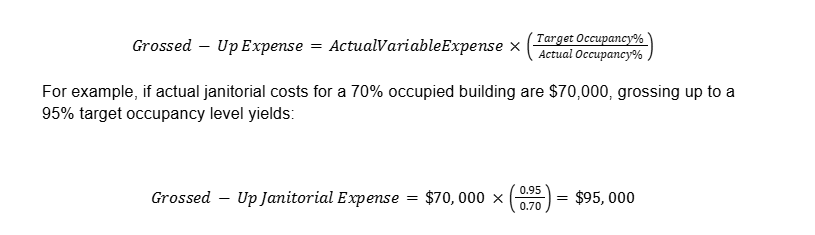
In multi-tenant shopping centers, not all spaces are occupied all the time. “Gross up” clauses allow landlords to artificially inflate variable expenses (like trash removal or water) to reflect what the cost would be if the center were 100% occupied. This protects the landlord from absorbing the share of expenses for empty units. Before allocating costs to tenants, it is crucial to accurately determine the total CAM expenses to ensure fair and transparent distribution.

The Error:

Landlords often Gross Up expenses that are fixed and do not vary with occupancy (like landscaping or security). They may also Gross Up to 100% when the lease only allows for 95%.

The Tenant’s Defense:

During CAM reconciliation, ensure that Gross Up calculations are only applied to variable expenses and are capped at the occupancy rate defined in the lease.

4. Controllable vs. Uncontrollable Caps

Sophisticated tenants negotiate “Caps” on controllable expenses (typically a 3% to 5% cumulative compounding cap). Controllable CAM expenses are costs that landlords can manage or influence, such as maintenance, repairs, or janitorial services, while non-controllable CAM refers to costs that landlords cannot reasonably influence, like utilities or fixed government fees. Expense limits, or caps, are applied to controllable CAM expenses in lease agreements to protect tenants from excessive increases by setting a maximum allowable cost for these items. This prevents CAM costs from skyrocketing.

The Error:

Landlords frequently miscategorize expenses. They might classify “Snow Removal” as uncontrollable (because the weather is unpredictable), whereas the lease might define the contract for snow removal as a controllable expense subject to the cap.

The Tenant’s Defense:

You need a year-over-year analysis. If controllable expenses jumped 12% but your cap is 5%, the invoice is wrong. This requires historical data, which is often missing in acquired portfolios, highlighting the need for data hygiene services that RE BackOffice provides.

The Strategic Approach to Audits

For the Lease Administration team, the idea of auditing every single invoice is daunting. It is also inefficient. You need a triage system.

Audit rights, as outlined in lease agreements, are crucial because they allow tenants to review the landlord’s books and records, including prior year reconciliations, to verify the accuracy of CAM charges.

When conducting a full audit, it is essential to collect and review supporting documentation, such as vendor invoices and lease abstracts, to ensure transparency and accuracy in the CAM reconciliation process. This thorough review helps resolve disputes and prepares audit-ready statements.

Step 1: The Desktop Audit

This is a high level review. Compare the current year’s reconciliation against the prior year and the budget. Look for variances exceeding a certain threshold (e.g., >10%). It is important to also review reconciliation statements from prior years, as this can help identify discrepancies or trends that may have been missed previously.

Check the math. It sounds simple, but formula errors in Excel spreadsheets sent by property managers are incredibly common.

Step 2: The Lease Review

Verify the pro rata share. Did the Gross Leasable Area (GLA) of the shopping center change? If the landlord built a new pad site in the parking lot, the total square footage of the center increased. Your pro rata share (Your Area / Total Area) should have decreased. If it stayed the same, you are subsidizing the new tenant.

When reviewing your lease, it is crucial to ensure you only pay expenses specifically outlined in your lease agreement. This helps prevent being charged for costs you are not contractually obligated to cover.

Step 3: The Full Audit

For variances that cannot be explained or high-dollar discrepancies, you initiate a full audit. This involves requesting the General Ledger and invoices from the landlord. This is time-consuming and adversarial, which is why many tenants avoid it.

Commercial property managers play a crucial role in this process, as they are responsible for ensuring accurate expense classification and maintaining the financial health of the property during CAM reconciliation.

However, this is where CAM reconciliation services shine. By outsourcing this confrontational and detailed work, you maintain the landlord relationship while ensuring fiscal compliance.

Leveraging Technology and Outsourcing for Speed

The modern tenant cannot rely on spreadsheets alone. For companies growing via acquisition, the integration of data is the bottleneck.

When you acquire a chain of 50 stores, you need those leases abstracted and entered into your ERP immediately so you don’t miss a renewal option or an audit window. Many leases have strict time limits (e.g., 60 or 90 days after receipt of the statement) to challenge charges. If you miss that window because your team is bogged down, you have legally accepted the overcharge.

Partners like RE BackOffice act as an extension of your team. We do not just process data; we clean it. We identify the “dirty data” from legacy systems, missing commencement dates, incorrect square footages, vague clause abstractions, and standardize it.

This “Data Hygiene” is crucial for the CFO. You cannot make accurate financial projections or EBITDA adjustments if your underlying lease data is flawed. Accurate lease data integration also supports improved financial reporting and ensures compliance with accounting standards such as ASC 842, making your statements audit-ready.

The Human Element: Negotiating the Settlement

Once the CAM reconciliation is complete and errors are identified, the recovery process begins. This requires a delicate touch.

Landlords depend on cash flow just as you do. Presenting a claim for $50,000 in past overcharges can strain the relationship. Transparent communication and fair resolution of CAM disputes not only help avoid conflict but also contribute to tenant retention by building trust and maintaining strong tenant relationships.

Effective strategies include:

  1. The Future Credit: Instead of asking for a check, negotiate a rent credit spread over the next few months. This is easier for the landlord’s cash flow and achieves the same EBITDA result for you.
  2. The Lease Amendment: If the dispute arises from vague language, use the audit finding as leverage to amend the lease for better clarity going forward, preventing future disputes.
  3. The Portfolio Approach: If you have multiple leases with the same landlord (common in REITs), aggregate the findings. Negotiating one global settlement is faster and more effective than fighting store by store.

Clear Communication: The Key to Successful CAM Disputes

In the world of commercial property, clear communication is the foundation of a successful CAM reconciliation process. With so many moving parts ranging from actual CAM expenses and estimated CAM charges to expense caps and eligible CAM expenses, misunderstandings can easily arise if property managers and tenants are not aligned. This is especially true in many commercial leases, where the fine print can make a significant difference in what tenants pay.

For property managers and landlords, transparency is not just a courtesy; it’s a necessity. Providing tenants with detailed records of CAM expenses, including invoices, receipts, and vendor contracts for services like janitorial services, parking lot maintenance, and snow removal, helps demystify the reconciliation process. When tenants can see exactly how CAM fees and CAM costs are calculated, including any adjustments made to estimated CAM charges, it builds trust and reduces the risk of tenant disputes.

Open lines of communication throughout the year, not just during the annual reconciliation, are essential. Property managers should proactively update tenants on changes to CAM charges, explain the methodology behind calculating each tenant’s proportionate share, and be ready to address any questions or concerns. This ongoing dialogue ensures that tenants understand how their CAM charges are determined and what specific expenses are included under the lease agreement.

A thorough understanding of the lease agreement is also critical. Property managers must know which expenses are eligible for CAM recovery, how expense caps or limits apply, and how to handle any disputes that may arise. By being well-versed in the terms of commercial leases, property managers can ensure that only permitted expenses are passed through and that tenants are not overcharged for non-eligible items.

CAM reconciliation

Why 3-5% Recovery Matters for Valuation

Let us circle back to the Economic Buyer. Why go through this effort?

In the retail and franchise world, you are valued on a multiple of earnings. Every dollar saved in occupancy cost is a dollar of pure profit.

If you are preparing for a future liquidity event, a sale, or another acquisition, your P&L needs to be as clean as possible. A history of rigorous CAM reconciliation demonstrates operational maturity to potential investors. It shows that you have tight controls over your expenses. Lower CAM charges directly reduce your operating costs, which improves overall business profitability and enhances your EBITDA.

Furthermore, recovering 3% to 5% of occupancy costs can fund other strategic initiatives. It can fund the technology upgrades needed for better inventory management or the marketing budget for a new product launch.

Case Scenario: The “Pass-Through” Phantom

Imagine a scenario involving a newly acquired franchisee portfolio of 20 fast casual dining locations. The previous owner was a smaller operator who paid invoices as they came in, lacking the leverage or resources to push back.

The Situation:

Upon acquisition, your Lease Admin team notices that the CAM charges for five locations in a specific region are $4 per square foot higher than the market average. These CAM charges include expenses for shared spaces such as parking lots, landscaping, and common area utilities, all of which are subject to CAM fees.

The Action:

You engage CAM reconciliation services to perform a forensic review. As part of this process, cam recoveries are identified and tracked to ensure that all amounts collected from tenants are accurately categorized and reconciled with actual expenses, minimizing disputes and ensuring compliance with accounting standards.

The Findings:

  1. Zoning Compliance Costs: The landlord had been passing through legal fees associated with rezoning a parcel of the land for a future development unrelated to the current center.
  2. Management Fee Duplication: The landlord was charging a 15% admin fee on top of a third-party management fee, while the lease capped the total administrative burden at 10%.
  3. Insurance Deductibles: The landlord passed through several high insurance deductibles for claims that were covered by their policy.

Additionally, monthly payments for CAM were calculated based on estimated costs at the start of the year and then adjusted after reconciliation to reflect the actual expenses incurred.

The Result:

The audit identified $125,000 in overcharges over a two-year period (the look-back period allowed in the lease).

The Impact:

  • Immediate Cash: A credit of $125,000 applied to future rent.
  • Recurring Savings: The removal of the duplicate fees reduces future annual occupancy costs by $40,000.
  • Valuation: That $40,000 in recurring savings adds roughly $400,000 to the portfolio’s value at a 10x cap.

This was not “finding pennies.” This was strategic asset management.

Overcoming Internal Resistance

Often, the biggest barrier to effective CAM auditing is not the landlord, but internal inertia.

  • CFOs may worry that audits will distract the team from core business activities.
  • Lease Admins may fear that bringing in an outside partner signals they aren’t doing their job.

It is also important to note that the property owner is responsible for accurate CAM billing and ensuring compliance with lease terms, making proper reconciliation essential for both parties.

It is vital to reframe the narrative. For the Lease Admin team, utilizing RE BackOffice is not a replacement; it is a force multiplier. It allows them to elevate their role from data entry clerks to portfolio analysts. It removes the low value, high volume work of abstraction and initial reconciliation, allowing them to focus on high value disputes and lease optimization.

For the CFO, the ROI is clear. The cost of the service is a fraction of the recovered capital. It is a self funding initiative.

The Future of CAM: AI and Automation

The world of lease administration is changing. We are moving away from manual Excel reviews toward AI-driven anomaly detection.

Modern CAM reconciliation services utilize machine learning to benchmark costs. If the industry standard for “Parking Lot Maintenance” in a specific zip code is $0.50 psf, and your invoice shows $1.50 psf, the system flags it automatically. AI can also help track building maintenance costs as part of CAM reconciliation, ensuring that variable operational expenses related to property management and building upkeep are accurately monitored and controlled.

This technology is essential for the “Speed” required by modern franchise operators. You cannot afford to wait six months to understand the financial health of a newly acquired location. You need that data ingested, cleaned, and analyzed immediately.

Conclusion: Turning Defense into Offense

In the competitive landscape of retail and franchising, you cannot control the price of raw materials. You cannot strictly control the labor market. But you can control your lease compliance.

CAM reconciliation is more than a defensive measure to prevent overpayment. It is an offensive strategy to maximize EBITDA, ensure data hygiene, and facilitate rapid growth. Accurately reconciling common area maintenance expenses is essential to ensure fairness and transparency for tenants, as these costs are often passed through according to lease agreements.

For the tenant, the message is clear: Do not accept “pass-through” expenses as gospel. Challenge the charges. Scrutinize the data.

If your team is buried under legacy data or struggling to keep up with the velocity of M&A activity, it is time to look for support. RE BackOffice helps large franchise operators recover that critical 3% to 5% of annual occupancy costs. We handle the heavy lifting of abstraction and reconciliation so you can focus on what matters: growing your business and maximizing your margins.

Your lease is a contract, not a suggestion. Enforce it.

Frequently Asked Questions about CAM Reconciliation

Q: What is the typical statute of limitations for challenging CAM charges?

A: This is entirely dependent on your lease. Most commercial leases have an “audit window” ranging from 60 days to 2 years after the receipt of the reconciliation statement. If you miss this window, you generally waive your right to object. This highlights the importance of speed and CAM reconciliation services that can process data immediately upon receipt.

Q: Can we audit a landlord if we have already paid the invoice?

A: Generally, yes, provided you are within the audit window defined in the lease. Many tenants pay the invoice “under protest” to avoid default notices while reserving the right to audit.

Q: What is a “slippage” in CAM terms?

A: Slippage refers to the revenue lost by landlords when they fail to capture 100% of the operating expenses from tenants due to caps, exclusions, or vacancies. Conversely, from a tenant’s perspective, avoiding slippage means ensuring you don’t pay for the landlord’s inefficiencies.

Q: How does “Gross Up” work for variable vs. fixed costs?

A: Fixed costs (like security or landscaping) generally do not change based on occupancy and should not be grossed up. Variable costs (like water, electricity, and janitorial services for common areas) fluctuate with usage. Landlords gross these up to estimate what the cost would be at full occupancy so that the tenants currently in the building pay their fair share of a “fully operational” building. Errors occur when landlords apply gross up calculations to fixed costs.

Q: Why is lease abstraction critical for CAM audits?

A: You cannot audit what you cannot measure. Lease abstraction converts dense legal PDF documents into structured data. It pulls out the specific “inclusions,” “exclusions,” “caps,” and “denominators” required to verify the landlord’s math. Without accurate abstraction, a core competency of RE BackOffice, a CAM audit is just a guess.

Q: What documentation is needed for a CAM audit?

A: Supporting documentation for a CAM audit typically includes the lease agreement, annual reconciliation statements, and detailed expense reports. It is also important to review vendor invoices, as they provide critical evidence of actual expenses incurred and help ensure accurate CAM cost tracking.

RE BackOffice CAM Reconciliation Services

RE BackOffice provides specialized CAM reconciliation services designed to protect commercial tenants and multi-unit franchise operators from the silent erosion of profit margins. By combining advanced lease abstraction with deep financial analysis, our team meticulously audits annual landlord statements against your specific lease terms to verify every cap, exclusion, and gross-up calculation. We act as your strategic overflow engine, transforming complex, disparate lease data into clear financial recovery opportunities. Instead of letting “pass-through” expenses drain your EBITDA, we help you identify and reclaim the estimated 3% to 5% of occupancy costs that are frequently overbilled. Contact us today to turn your lease compliance into a source of capital recovery.

RE BackOffice

How Accurate CAM Reconciliation Helps Owners Avoid Costly Tenant Pushback


For commercial real estate owners, asset managers, and property management teams, the end of the fiscal year typically marks the onset of a high-stress period. It is the season of CAM reconciliation. This process involves reconciling cam fees between property owners and tenants. While often viewed as a purely administrative or accounting function, the process of reconciling Common Area Maintenance (CAM) charges is actually one of the most critical touchpoints in the landlord-tenant relationship.

It is also a significant lever for Net Operating Income (NOI).

The stakes are incredibly high. In an industry where “Cash Flow Velocity” is paramount, a delayed or inaccurate reconciliation statement does not just annoy a tenant; it freezes capital. Every day that a reconciliation sits in dispute is a day that revenue remains uncollected. For the Director of Asset Management, this delay in the “signed-to-billed” cycle directly impacts portfolio performance. For the Lease Administration Manager, it means a team bogged down in forensic accounting rather than focusing on high-value tenant retention. Property owners must also account for any additional expense that may arise from inaccurate reconciliation, as unforeseen costs can impact both their financial planning and tenant relationships.

This guide explores the mechanics of dispute-proofing your portfolio. We will examine how precision in CAM reconciliation services can prevent costly pushback, accelerate speed-to-bill, and ultimately protect the asset’s value.

The High Cost of “Close Enough”

In commercial leasing, there is no such thing as “close enough.” A margin of error that seems negligible on a spreadsheet can compound into tens of thousands of dollars in lost revenue or legal fees when extrapolated across a portfolio over multiple years. Additionally, exceeding expense limits set in lease agreements, such as caps on controllable expenses like marketing, advertising, or labor, can lead to disputes between tenants and landlords over financial responsibility.

Reconciling CAM charges involves reviewing a wide range of expenses, including variable costs and fixed costs such as property taxes, ground maintenance, and security. These fixed costs do not fluctuate with occupancy or usage but still require careful reconciliation to ensure accuracy in tenant billing.

For property managers and landlords, the operational burden of CAM reconciliation is significant. The process can be time-consuming for internal teams, especially given the complexity and volume of data involved.

The Financial Impact of Slippage in CAM Expenses

For Asset Managers, the primary goal is NOI maximization. However, NOI is constantly under threat from “slippage,” the gap between what a lease allows a landlord to recover and what is actually billed. Accurate CAM recoveries are essential for proper financial reporting and compliance, ensuring that expenses are categorized correctly under industry standards and accounting regulations like ASC 842.

Slippage occurs when recoverable expenses are missed, calculation methodologies are misapplied, or gross-up provisions are ignored. Conversely, over-billing due to sloppy accounting triggers tenant audits. When a tenant initiates an audit, the burden of proof shifts to the landlord, and tenants may request audits of prior years to identify discrepancies. The result is a stalled payment process where cash flow velocity hits a wall. The reconciliation statement, intended to settle the year’s accounts, instead becomes the opening salvo in a protracted negotiation.

The Operational Cost: Burnout and Inefficiency

For Lease Administration Managers, the cost of inaccurate reconciliations is measured in human capital. During peak seasons, internal teams are often overwhelmed. If a team is rushing to manually abstract data and calculate complex pools, errors are inevitable.

Poor record-keeping can lead to inaccuracies in CAM reconciliation and increase the likelihood of tenant disputes. When a tenant pushes back against a statement, the internal team must stop their forward-looking work to look backward. They must dig through invoices, re-read lease clauses, and defend their math. This reactive cycle is a major cause of burnout. It forces high-level staff to engage in low-level data entry and dispute resolution, preventing them from focusing on strategic initiatives like tenant satisfaction and conflict resolution.

Maintaining detailed records such as invoices, receipts, vendor contracts, and utility bills is essential to support accurate reconciliation and prevent disputes.

The Anatomy of Tenant Pushback

To avoid pushback, one must understand its origins. Tenants rarely dispute CAM reconciliation statements simply to be difficult. They dispute them because commercial leases are complex, and trust is easily eroded by a lack of transparency. Many commercial leases include audit rights, which allow tenants to review and verify the landlord’s financial records related to CAM expenses, helping to resolve discrepancies and maintain trust.

Tenants are responsible for understanding their lease terms and ensuring they only pay expenses they are genuinely liable for.

1. The Gross-Up Misunderstanding

One of the most frequent sources of friction involves gross-up calculations. In a building that is not 100% occupied, variable expenses (like janitorial services or utilities) will naturally be lower. Most leases allow landlords to “gross up” these expenses to what they would be if the building were 95% or 100% occupied. This process ensures that each tenant’s share of expenses is accurately calculated, preventing unfair allocation.

This protects the landlord’s reimbursement rate. However, if the gross-up is calculated incorrectly or if the methodology is not clearly explained in the statement, tenants will flag it. They will argue that they are subsidizing vacant space. An accurate reconciliation must not only apply the math correctly but also present the logic transparently. Tenant-specific adjustments may also be necessary to account for unique lease terms, mid-year occupancy changes, or negotiated exclusions.

2. Capital Expenditures vs. Operating Expenses

This is the classic battleground. Landlords naturally want to pass through costs to maintain the building’s standard. Tenants, however, will vehemently oppose paying for capital improvements that increase the asset’s long-term value under the guise of “maintenance.”

If a roof is patched, it is generally an operating expense (OpEx). If the roof is replaced, it is a capital expenditure (CapEx). Major repairs, such as roof replacements, are considered capital expenses and should not be included in CAM charges or treated as operating expenses. Disputes arise when the line blurs. Sophisticated tenants with their own lease auditors will demand a breakdown of every significant invoice. If your team has lumped a capital project into a CAM pool without amortizing it correctly according to the lease terms (e.g., over the useful life of the asset), you invite an immediate audit.

3. Controllable vs. Non-Controllable Caps

Many modern leases include caps on “controllable” expenses to protect tenants from runaway management fees or administrative costs. Only certain included expenses are subject to these controllable caps, while uncontrollable cam expenses, such as utilities and maintenance that fluctuate with occupancy and operational factors, are typically excluded from caps. Calculating these caps is notoriously difficult. Is the cap cumulative? Is it compounded? Does it reset annually?

If your internal team misses a cap constraint and over-bills, the tenant will not just ask for a refund; they will likely scrutinize every other line item in the statement. One error breaks the trust, leading to a “forensic” mindset where the tenant assumes the entire statement is flawed.

Speed-to-Bill and the Role of Lease Abstraction

The foundation of an accurate CAM reconciliation is laid long before the fiscal year ends. It begins the moment the lease is signed. During lease abstraction, it is crucial to accurately capture details from service contracts and vendor invoices, as these documents are essential for correct billing and precise allocation of CAM expenses.

The “Signed-to-Billed” Cycle

Asset Managers focused on cash flow velocity know that time is money. A lease that sits in a digital pile, waiting to be abstracted, is a dormant asset. You cannot bill a tenant for rent or CAM estimates until the lease data is live in your ERP system (whether that is Yardi, MRI, or another platform). Typically, estimated CAM charges are divided into monthly payments, which are later adjusted through area maintenance CAM reconciliation to ensure tenants pay their fair share and to correct any overpayment or underpayment.

The industry standard for “speed-to-bill” is tightening. Leading firms now aim for a 24 to 48-hour turnaround on new lease abstraction. This ensures that as soon as a lease is executed, the billing engine is running.

Garbage In, Garbage Out

If the initial lease abstraction is flawed, the year-end reconciliation is doomed. If the abstractor fails to note a specific exclusion (e.g., “Tenant is not responsible for parking lot resurfacing”), that expense will automatically flow into the tenant’s bill at year-end.

The tenant will catch this. They will point to page 45, section 3.2 of their lease. The landlord will have to issue a credit. The relationship suffers.

Accurately categorizing property management fees and shared expenses is essential to prevent disputes, as these categories often require careful allocation and tracking for compliance and fair cost distribution among tenants.

This is where the integration of high-quality abstraction and CAM reconciliation services becomes vital. The two processes are inextricably linked. Accurate abstraction ensures that the rules of engagement are set correctly in the system, allowing for automated, error-free calculations later.

Strategic Outsourcing as a Competitive Advantage

Given the complexity of gross-ups, caps, and amortizations, many property owners are rethinking their operational models. The traditional approach relying solely on in-house teams who are already juggling property management and tenant relations is proving hard to scale. Accurate calculation of total CAM expenses and proper allocation to each tenant based on their pro rata share are essential to ensure fair and transparent CAM reconciliation.

Scalable Back-Office Support

The concept of a “Scalable Back-Office” is gaining traction among Portfolio Managers and Directors of Tenant Coordination. The logic is simple: stop burning out internal teams with data entry during peak seasons.

By leveraging specialized partners, firms can plug into a resource that handles the manual heavy lifting. Companies like RE BackOffice have championed this model, integrating directly into clients’ Yardi or MRI instances. This allows the internal team to act as reviewers and relationship managers rather than data processors.

When you utilize professional CAM reconciliation services, you are essentially buying insurance against error. These teams specialize in the nuances of lease language. They know how to handle complex gross-up calculations to ensure you are recovering 100% of reimbursable expenses, including those related to the maintenance and operation of common areas such as parking lots. They understand the difference between a cumulative and a non-cumulative cap.

The Review Layer vs. The Doer Layer

The most efficient asset management teams separate the “doing” from the “reviewing.”

  • The Doer Layer (External): Handles lease abstraction within 24-48 hours, processes expense pools, calculates pro-rata shares, and generates the initial reconciliation statements.
  • The Review Layer (Internal): The Property Manager or Asset Manager reviews the final output, ensuring it aligns with the strategic goals of the asset, and then presents it to the tenant.

This structure maximizes NOI by ensuring no recoverable expense is missed, while simultaneously freeing up the internal team to handle high-value tasks.

CAM reconciliation

Best Practices for Dispute-Proofing Your Portfolio from Tenant Disputes

How does a landlord move from a defensive posture (reacting to disputes) to an offensive posture (preventing them)? It requires a systematic approach to accuracy and transparency.

1. Standardize the Chart of Accounts

Inconsistency is the enemy of speed. Ensure that your General Ledger (GL) codes map clearly to the CAM pools defined in your leases. If your GL codes are messy or inconsistent across properties, automation becomes impossible, and manual errors skyrocket.

2. Real-Time Abstraction

Do not wait until Q4 to review new leases. Implement a protocol where leases are abstracted and verified within 48 hours of execution. This “Speed-to-Bill” mentality ensures that when reconciliation season arrives, the data foundation is already solid.

3. Transparent Communication Packages

When sending the reconciliation statement, overwhelm the tenant with clarity. Do not just send a bill. Send a package that includes;

  • A summary letter explaining significant variances (e.g., “Snow removal costs were up 20% due to record snowfall in February”).
  • A clear breakdown of the gross-up calculation.
  • A schedule of capital amortizations included in the year’s OpEx.

By explaining the “why” behind the numbers, you preempt the tenant’s questions. A tenant is less likely to audit a landlord who proactively explains variances.

4. Leverage Technology and Expertise

Modern ERP systems are powerful, but they require expert operation. If your internal team is not fully versed in the advanced modules of your property management software, you are underutilizing your tech stack.

Partners like RE BackOffice do not just perform data entry; they optimize the usage of these platforms. They ensure that the complex logic of the lease is accurately reflected in the software’s billing parameters. This ensures that the system works for you, automating calculations that would otherwise be prone to human error.

The “Cash Flow Velocity” Mindset

For the Asset Manager, the ultimate metric is the velocity of cash flow. A dispute slows money down. An accurate CAM reconciliation speeds it up.

Consider the timeline of a typical dispute.

  1. January: Reconciliation statement sent.
  2. February: Tenant questions a $5,000 charge regarding HVAC maintenance.
  3. March: Property Manager digs for invoices. Finds the invoice but realizes it was coded incorrectly.
  4. April: Revised statement sent.
  5. May: Tenant pays.

That is a four-month lag in revenue realization. Now, multiply that by 50 tenants across a portfolio. The impact on cash flow is massive.

Now consider the optimized timeline;

  1. January: Statement sent. It includes a pre-emptive note about the HVAC charge and a copy of the invoice, verifying it was a repair, not a replacement.
  2. February: Tenant pays.

The difference is not just administrative; it is financial. By prioritizing accuracy and using professional CAM reconciliation services to handle the rigorous detail work, owners compress the cycle time between billing and collection.

Winning the Tenant Relationship

It is important to remember that the tenant is also a business with a bottom line to protect. When a landlord consistently provides accurate, timely, and well-documented reconciliation statements, they build a reputation for professional integrity.

This reputation pays dividends during lease renewals. A tenant is more likely to renew in a building where they trust the management than in one where every year-end bill feels like a battle.

The Role of Conflict Resolution

When the internal Lease Administration team is not buried in spreadsheets, they can focus on conflict resolution. If a legitimate dispute does arise, they have the bandwidth to handle it professionally and quickly.

This is the hidden value of outsourcing the technical grunt work. It allows the human side of property management to flourish. By offloading the manual abstraction and calculation to firms like RE BackOffice, your staff can transition from being data processors to being true asset managers.

A Checklist for Owners and Managers

To summarize, here is a strategic checklist for Asset Managers and Lease Admins looking to avoid tenant pushback this coming season;

  • Audit Your Abstraction Process: Is there a lag between lease signing and billing? Aim for a 24-48 hour turnaround to maximize Speed-to-Bill.
  • Review Gross-Up Logic: Ensure your team (or your partner) is capturing 100% of reimbursable expenses by correctly applying gross-up provisions.
  • Check the Caps: creating a specific review step for controllable expense caps.
  • Prepare the Narrative: Don’t just send numbers. Draft explanations for any expense category that increased by more than 5-10% year-over-year.
  • Assess Internal Bandwidth: Be honest about your team’s capacity. If they are drowning, quality will suffer. Consider plugging in external CAM reconciliation services to handle the surge.

Key Components of CAM Reconciliation

Accurate CAM reconciliation is built on a foundation of several essential components that commercial property managers must address to ensure both compliance and fairness. The process starts with a comprehensive understanding of the lease agreement, which outlines the rules for how CAM expenses are allocated, what constitutes eligible CAM expenses, and any expense caps or exclusions that may apply.

A critical first step is compiling a detailed record of all actual CAM expenses incurred throughout the year. This includes costs for janitorial services, landscaping, parking lot maintenance, management fees, property taxes, and other operating costs associated with maintaining shared spaces in a commercial property. Property managers must ensure that only eligible CAM expenses, as defined in the lease agreement, are included in the reconciliation process.

Next, the tenant’s proportionate share of these expenses must be calculated, typically based on the square footage occupied relative to the total leasable square footage of the property. This ensures that each tenant pays their fair share of common area maintenance expenses, in line with the terms of their lease.

It’s also essential to distinguish between controllable and non-controllable CAM expenses. Controllable CAM expenses, such as management fees, janitorial services, and routine building maintenance, can often be limited by expense caps outlined in the lease. Non-controllable CAM expenses, like property taxes and certain capital expenditures, are generally outside the landlord’s direct control and may be treated differently in the reconciliation process.

The reconciliation process itself involves comparing the estimated CAM charges billed to tenants throughout the year with the actual CAM expenses incurred. Any discrepancies are addressed by issuing additional payments or credits, ensuring that tenants are only charged for their true proportionate share of the costs. This step-by-step approach, when executed with precision, helps property managers avoid disputes and maintain trust with tenants.

By focusing on these key components, thorough documentation of actual CAM expenses, careful review of the lease agreement, accurate calculation of each tenant’s proportionate share, clear separation of controllable and non-controllable CAM expenses, and a transparent reconciliation process, property managers can deliver fair and accurate CAM charges, supporting both operational efficiency and positive tenant relationships.

Year-End Reconciliation: Closing the Loop

The year-end reconciliation process is the final, crucial step in the CAM reconciliation cycle for commercial property managers. This stage ensures that all cam expenses are accurately accounted for and that tenants pay their fair share, as outlined in their commercial leases and lease terms.

At year-end, property managers conduct a thorough review of all actual expenses incurred over the previous year, including operating costs, eligible cam expenses, and any capital expenditures that may be recoverable under the lease agreement. This review is essential for identifying the true cam costs associated with maintaining the property’s common areas.

Once actual CAM expenses are confirmed, they are compared against the estimated CAM charges that tenants have paid throughout the year. This comparison highlights any discrepancies whether tenants have overpaid or underpaid relative to their proportionate share of the actual expenses.

The next step is to adjust tenant payments accordingly. If actual expenses exceed the estimated charges, tenants may owe additional payments. Conversely, if estimated charges were higher than actual expenses, tenants are entitled to credits or refunds. This adjustment process ensures that each tenant’s cam charges are aligned with the actual costs incurred, maintaining fairness and compliance with the lease agreement.

To provide transparency and support understanding of CAM reconciliation, property managers prepare detailed reconciliation statements for each tenant. These statements clearly outline the actual cam expenses, the estimated CAM charges paid, and any adjustments made, including additional payments or credits due. This level of detail helps prevent misunderstandings and supports positive landlord-tenant relationships.

Finally, clear and proactive communication with tenants is essential. By explaining the reconciliation results, addressing any questions, and providing supporting documentation, property managers can minimize the risk of tenant disputes and demonstrate a commitment to transparency.

By following these steps: a comprehensive review of actual expenses, careful comparison with estimated charges, precise adjustment of tenant payments, preparation of clear statements, and open communication with property managers can close the loop on the CAM reconciliation process. This not only ensures compliance with lease terms and commercial leases but also supports effective financial planning, robust reconciliation procedures, and long-term tenant satisfaction.

Conclusion

In commercial real estate, the devil is in the details, but the profit is in the process. Tenant pushback on CAM charges is not an inevitable cost of doing business; it is often a symptom of operational inefficiency.

By treating CAM reconciliation not as a back-office chore but as a strategic financial function, owners can unlock significant value. Whether through sharper internal protocols or by partnering with specialized firms like RE BackOffice to handle the complexities of lease abstraction and calculations, the goal remains the same: accuracy, speed, and trust.

When you reduce the “signed-to-billed” cycle and eliminate calculation errors, you do more than just balance the books. You maximize NOI, you protect your staff from burnout, and you build a portfolio that runs on the oil of transparency rather than the friction of disputes.

Frequently Asked Questions about CAM Reconciliation

What triggers a CAM audit from a tenant?

Tenants typically trigger audits when they see large, unexplained year-over-year increases in expenses, particularly in “controllable” categories. They also look for red flags like a lack of gross-up explanations or vague line items labeled “miscellaneous” or “administrative.” Consistently late or error-prone statements also signal to tenants that the landlord’s accounting might be sloppy, prompting a deeper look.

How does lease abstraction affect CAM reconciliation?

Lease abstraction is the “source of truth” for reconciliation. If the lease abstract fails to capture specific inclusions, exclusions, caps, or base year definitions, the billing system will calculate charges incorrectly. High-quality abstraction ideally completed within 48 hours of lease execution ensures that the data feeding into the reconciliation process is accurate from day one.

What is the difference between cumulative and non-cumulative caps?

A non-cumulative cap limits the increase of controllable expenses to a set percentage over the previous year’s actual expenses. If the expenses are lower than the cap, the “unused” portion is lost.

A cumulative cap usually allows the “unused” portion of the cap to carry over to future years, or calculates the cap limit based on the initial base year compounded annually. Confusing these two is a leading cause of billing errors and subsequent tenant pushback.

Why is the “Gross-Up” calculation so critical for NOI?

The gross-up provision allows a landlord to bill tenants for the variable expenses (like cleaning and utilities) as if the building were fully occupied (usually 95% or 100%). Without this, the landlord ends up paying the share of expenses attributable to vacant space. Correctly calculating the gross-up is essential to recovering 100% of the reimbursable expenses the landlord is entitled to, thereby maximizing Net Operating Income (NOI).

How can outsourcing CAM reconciliation reduce team burnout?

CAM reconciliation creates a massive seasonal workload spike. Internal teams often have to work nights and weekends to process data, leading to burnout and turnover. By using CAM reconciliation services, a firm can offload the manual data entry, complex calculations, and initial reviews to an external partner. This allows the internal team to maintain a balanced workload and focus on high-value tasks like tenant relations and strategic asset management.

Key Takeaways for Asset Managers

  • Velocity is Key: Reduce the cycle time from lease execution to billing to improve cash flow.
  • Recover Everything: Ensure complex gross-ups are handled correctly to stop NOI leakage.
  • Scale Smartly: Use external partners to handle volume spikes so your core team remains focused on strategy.

Key Takeaways for Lease Administrators

  • Accuracy Prevents Disputes: A precise, well-documented statement is your best defense against audits.
  • Data Integrity: The quality of your CAM recs depends entirely on the quality of your lease abstraction.
  • Focus on Relations: Let the systems and partners handle the math so you can handle the tenants.

Ready to accelerate your “signed-to-billed” cycle and eliminate reconciliation disputes?

RE BackOffice provides the scalable back-office support you need, delivering precision lease abstraction and audit-proof CAM reconciliation services directly into your Yardi or MRI instance. Let us handle the complex calculations so your team can stop drowning in data and start focusing on maximizing NOI and tenant satisfaction.

RE BackOffice

From Missing Certificates to Real Risk: How Better COI Visibility Protects Landlords


The commercial real estate industry runs on calculated risk. Every time you sign a lease, acquire a new property, or contract a vendor for maintenance, you are essentially trading potential revenue for potential liability. For the Director of Asset Management, the goal is always NOI maximization and protecting the asset’s value. For the Lease Administration Manager, the goal is operational efficiency and keeping the data clean.

However, there is a silent threat that often sits buried in a filing cabinet or lost in an overflowing email inbox. It is a single piece of paper that, if missing or incorrect, can turn a profitable asset into a legal and financial nightmare. We are talking about the certificate of insurance, an official document that verifies insurance coverage.

While it may seem like just another administrative checkbox, the failure to properly track, verify, and renew these documents creates a gap in your armor. When a tenant’s fryer catches fire, or a vendor’s scaffolding collapses, the first question legal counsel asks is: “Do we have a valid certificate from the insurance company?” If the answer is “I think so” or “It might be in the spreadsheet,” you are already in trouble.

This guide explores the transition from reactive paperwork shuffling to proactive risk mitigation. We will examine how better visibility into your compliance data not only protects you from catastrophic loss but also accelerates your “speed-to-bill” cycle, ensuring your cash flow velocity remains uninterrupted. The company is responsible for managing and verifying insurance policies for compliance, risk management, and accountability.

The High Stakes of the “Missing” Document

To understand why COI management is critical, we must first look at the persona most affected by its failure: the Asset Manager.

Your mandate is clear. You need to maximize Net Operating Income (NOI) and ensure the portfolio performs against its benchmarks. You view the property through the lens of revenue and risk. When a certificate of insurance is missing or expired, you are essentially underwriting the tenant’s risk with your own balance sheet. As part of the verification process, it is important to check key details on the certificate, such as the policy number, to ensure the insurance coverage is valid and accurate.

The Financial Hit to NOI

Example: Consider a scenario where a retail tenant in your portfolio causes significant water damage to three adjacent units. If their policy has lapsed, or if the coverage limits on their certificate of insurance were never verified against the lease requirements, the cost of repairs falls on the property owner’s insurance.

This triggers a deductible payment and, almost inevitably, a premium hike the following year. That increase in operating expenses cannot always be fully passed through to tenants, especially if you have caps on controllable expenses in your leases. The result is a direct hit to your NOI. For an Asset Manager focused on valuation, a $50,000 avoidable loss capitalized at a 5% cap rate reduces the asset’s value by $1 million. The stakes are far higher than just a “missing paper.”

The Legal Quagmire

Beyond the immediate financial cost, poor visibility creates legal fragility. Most commercial leases are drafted with strict indemnity clauses and requirements for tenants to name the landlord as an additional insured. However, a lease clause is only as good as the proof that backs it up.

If you cannot produce the certificate of insurance that proves the tenant was compliant at the time of the incident, your ability to subrogate claims (transfer the cost to the tenant’s insurer) is severely compromised. You may find yourself in a protracted legal battle where the burden of proof shifts to you. This consumes time, legal fees, and mental energy that should be spent on strategic asset initiatives.

The Operational bottleneck: Why Manual Tracking Fails

While the Asset Manager worries about the financial fallout, the Lease Administration Manager is fighting a war on a different front: the daily grind of data entry and compliance tracking.

The traditional method of tracking insurance is fundamentally broken. It usually involves a spreadsheet, a dedicated email folder, and a calendar of expiration dates that is rarely up to date. This manual approach is not just inefficient; it is a recipe for burnout and error. Management software can streamline compliance tracking, reduce errors, and improve operational efficiency by automating reminders and document management.

COI software integrates with HRIS, CRM, or property management systems to provide better visibility, automate compliance processes, and simplify risk management. When tracking and renewing documents, it is crucial to request and verify an updated COI to ensure current coverage details, policy types, and limits meet project requirements.

The “Signed-to-Billed” Delay

One of the most critical metrics in commercial real estate is the speed at which you can move a tenant from lease execution to rent commencement. We call this “Cash Flow Velocity.”

Often, a tenant cannot take possession of the space or begin their build-out until a valid certificate of insurance is on file. If your lease administration team is buried under a backlog of unabstracted leases and unverified certificates, the keys don’t get handed over.

Every day that the tenant is delayed in taking possession is a day you aren’t billing. In a portfolio of hundreds of leases, a 48-hour delay on every move-in due to administrative lag adds up to significant lost revenue. Efficient COI management is not just about protection; it is about removing the friction that slows down revenue recognition.

The Fatigue Factor

Lease administrators are highly skilled professionals. They should be focused on high-value tasks like conflict resolution, critical date management, and tenant relations. When you force them to spend hours manually keying in data from a certificate of insurance, checking boxes for “General Liability” and “Workers Comp,” you are misusing expensive talent.

This manual drudgery leads to “alert fatigue.” When you are staring at hundreds of expiration dates in a spreadsheet, it becomes easy to miss the one that matters. A typo in a date or a missed email notification can lead to a coverage gap of months. This is where the concept of a “Scalable Back-Office” becomes vital. You need a system that plugs into your existing platforms, whether Yardi, MRI, or RealPage, and handles the heavy lifting of data abstraction and verification without burning out your core team.

Anatomy of a Robust Compliance Strategy

So, what does “better visibility” actually look like? It moves beyond simply having a PDF saved in a folder. True visibility means having structured, searchable, and verified data that alerts you to risks before they happen.

An effective compliance strategy also includes a conflict of interest program (interest program), which helps organizations identify, assess, and address potential conflicts that could impact integrity and trust. Integrating an interest program complements insurance compliance by proactively managing conflicts of interest within the organization.

1. Granular Data Abstraction

A certificate of insurance is dense with information. It is not enough to know that a tenant “has insurance.” You need to know:

  • The Insurer’s Rating: Is the carrier financially stable (A.M. Best rated)?
  • The Limits: Do they meet the specific requirements of the lease? A tenant with a $1 million aggregate limit when the lease requires $2 million is technically in breach.
  • Endorsements: Is the landlord named as Additional Insured? Is there a Waiver of Subrogation? These specific endorsements are the firewall that protects the landlord’s policy.

Successfully extracting this data requires a level of detail that generalist admin staff often miss. This is where specialized partners like RE BackOffice can bridge the gap, ensuring that every nuance of the certificate is captured and compared against the lease stipulations.

2. Proactive Expiration Management

The most common failure point is the renewal. Tenants often change carriers or let policies lapse upon renewal. A robust COI management system works on a timeline, not a snapshot.

  • 90 Days Out: Automated notices go to the tenant reminding them of the upcoming expiration.
  • 30 Days Out: Escalated alerts go to the Property Manager.
  • 0 Days: Immediate flag for “Non-Compliant” status, potentially triggering default notices.

By automating this timeline, you remove the human error component. The Asset Manager can look at a dashboard and see exactly what percentage of the portfolio is compliant, rather than hoping the property manager at the site remembered to send an email.

3. Vendor Compliance: The Other Half of the Equation

We often focus on tenants, but vendors pose an equally high risk. Window washers, elevator mechanics, and landscapers are physically working on your property every day. If a vendor’s certificate of insurance has expired, you are exposed to workers’ compensation claims and liability for accidents caused by their equipment.

A centralized system treats vendor compliance with the same rigor as tenant compliance. Before a purchase order is cut or a check is released, the system should verify that the vendor’s insurance is active. This creates a “hard stop” that prevents unverified work from proceeding.

Insurance Tracking and Disclosure Management

In today’s complex property management landscape, insurance tracking and disclosure management are foundational to effective risk management. Ensuring that every party, whether tenant, vendor, or contractor, maintains the required liability coverage is not just a regulatory expectation but a business necessity. Insurance tracking software and robust COI management systems allow property managers and asset managers to verify that all insurance certificates are current, accurate, and meet the coverage requirements outlined in contracts.

Disclosure management goes hand-in-hand with insurance compliance. It’s not enough to simply collect certificates of insurance; property professionals must also manage disclosures about potential conflicts of interest. This means proactively identifying and documenting any relationships or outside activities that could impact the impartiality of business decisions. By maintaining transparency and ensuring all parties are on the same page, organizations can avoid undisclosed conflicts that might otherwise expose them to unnecessary risk.

A well-structured insurance tracking process provides instant visibility into compliance levels across your portfolio. It allows you to view compliance status, confirm that liability coverage is in place, and quickly address any gaps before work begins or claims arise. Meanwhile, effective disclosure management ensures that all interests are properly documented, reducing the risk of disputes and aligning all parties toward the same compliance goals.

Ultimately, integrating insurance tracking and disclosure management into your risk management strategy not only protects your financial interests but also builds trust with clients, vendors, and tenants. It’s a proactive approach that keeps your business covered, your operations compliant, and your reputation secure.

The Intersection of CAM, Audits, and Insurance

Lease administration is an ecosystem where everything is connected. COI management does not exist in a vacuum; it has direct implications for Common Area Maintenance (CAM) reconciliations and audits.

Protecting the Audit Trail

Sophisticated tenants often exercise their right to audit the landlord’s books. They will scrutinize operating expenses to ensure they are only paying their fair share. Insurance premiums are a major line item in CAM pools.

If a tenant discovers that the landlord’s insurance premium spiked because of a claim that should have been covered by another tenant (but wasn’t, due to a missing certificate of insurance), they may argue that the premium increase is not a “reasonable operating expense” that they should reimburse.

Having a watertight record of compliance demonstrates to auditors that the landlord is actively managing risk and controlling costs. It proves that you are a diligent fiduciary of the property’s expenses.

Gross-Up Calculations and Recoveries

For the Lease Admin Manager, accuracy in recoveries is paramount. We handle complex gross-up calculations to ensure you are recovering 100% of reimbursable expenses. Part of that accuracy relies on ensuring that the underlying data, including the categorization of insurance costs and recoveries, is correct.

When a tenant damages property and their insurance pays out, that recovery must be properly accounted for so it isn’t double-billed to the CAM pool. Without clear visibility into the insurance claims and the certificate of insurance associated with the tenant, these accounting entries can become messy, leading to reconciliation errors that take weeks to unravel.

AI

The Technology Shift: AI and Outsourcing

The commercial real estate industry is finally catching up to the digital age. The days of manual data entry are numbered. The volume of data is simply too high, and the velocity of transactions is too fast.

The Role of Intelligent Abstraction

Artificial Intelligence and Optical Character Recognition (OCR) are changing how we handle the certificate of insurance. Modern tools can scan a PDF, identify the carrier, limits, and dates, and populate the database automatically.

However, technology alone is rarely a silver bullet. AI can misread a blurry scan, or misinterpret a complex endorsement. This is why a “Human-in-the-Loop” approach remains the gold standard.

This is where the RE BackOffice philosophy of a “Scalable Back-Office” comes into play. By combining technology with experienced lease analysts, you get the speed of automation with the accuracy of human review. We plug into your existing ecosystem to handle the manual abstraction, validating the AI’s output and handling the exceptions that software can’t figure out.

Why Outsourcing Makes Sense for COIs

For an Asset Manager looking to streamline operations, COI management is a prime candidate for outsourcing. It is a high-volume, repetitive, rule-based task that requires specialized knowledge but does not necessarily require the physical presence of your property management team.

By shifting this burden to a specialized partner, you achieve two things:

  1. Cost Efficiency: You stop paying high domestic wages for data entry.
  2. Focus: Your internal team can pivot to tenant retention and value creation.

Messaging for the Secondary Persona (Lease Admin Manager) is key here: “Stop burning out your internal team.” Let them focus on the tenants, while a dedicated team ensures the compliance data is pristine. This results in a cleaner database, fewer surprises during audits, and a happier team.

Best Practices for a Risk-Free Portfolio

To transition from risk to resilience, landlords should adopt a set of best practices regarding their certificate of insurance workflows. Implementing robust COI workflows not only streamlines operations but also helps organizations meet regulatory expectations by ensuring compliance with legal and industry standards.

In industries like construction, strict COI best practices are essential for effective risk management, insurance compliance, and successful project execution, as construction activities require thorough oversight and proper insurance documentation.

Standardize the Lease Requirements

Compliance begins before the lease is even signed. Asset Managers should work with legal counsel and insurance brokers to create a standardized “Insurance Rider” that is attached to every lease. This rider should clearly spell out:

  • Minimum limits for General Liability, Auto, and Workers Comp.
  • Required rating of the insurer (e.g., A.M. Best A-VIII or better).
  • Specific wording for Additional Insured status.
  • Notice of cancellation requirements.

When the requirements are standardized, the verification process becomes much faster. It creates a clear “pass/fail” rubric that any analyst or software can follow.

The 24-48 Hour Turnaround Rule

Time kills deals, and it kills cash flow. When a new lease is executed, the abstraction process, including the verification of the initial certificate of insurance, must happen immediately.

At RE BackOffice, we emphasize a 24-48 hour turnaround on new lease abstraction. This ensures that the billing triggers are entered into the system immediately. You cannot bill the tenant if the lease isn’t in the system. By coupling lease abstraction with immediate COI verification, you ensure that the tenant is billable and compliant from Day 1.

Regular Audits of the Process

Don’t just audit the results; audit the process. Once a quarter, the Director of Asset Management should ask for a “Compliance Health Check.”

  • What percentage of the portfolio has an expired certificate of insurance?
  • What is the average age of the expirations (are they 5 days late or 5 months late)?
  • Are there specific tenants or property managers who are chronic offenders?

This data allows you to identify bottlenecks. Is it a software issue? A training issue? Or simply a lack of manpower? If it is a manpower issue, that is the signal to look for a scalable partner to handle the overflow.

The Tenant Perspective: Frictionless Compliance

It is worth remembering that tenants usually want to be compliant; they are just busy running their businesses. A cumbersome COI management process frustrates them too.

If a tenant sends a certificate and doesn’t hear back for three weeks, only to be told it was rejected because of a missing endorsement, that creates friction. They have to go back to their broker, request a change, and resubmit.

A streamlined process provides quick feedback. If a certificate of insurance is rejected, the tenant should know why within 24 hours. “We received your certificate, but it lists the wrong Additional Insured address. Please correct and resubmit.”

Fast, clear communication signals to the tenant that the management team is professional and on top of things. It sets a tone of efficiency that permeates the rest of the landlord-tenant relationship.

Navigating Complex Leases and Gross-Ups

For the Lease Admin Manager, the complexity often lies in the exceptions. A standard retail lease is one thing; a complex mixed-use development with shared facilities and reciprocal easement agreements (REAs) is another.

In these scenarios, the insurance requirements can be incredibly specific. A major anchor tenant might self-insure (which requires a completely different type of verification). A restaurant tenant might require specific liquor liability coverage.

Generic software often struggles with these nuances. This is why the human element of lease abstraction is non-negotiable. An experienced abstractor knows that a “self-insurance” clause in a lease overrides the standard requirement for a certificate of insurance. They ensure that the system reflects this exception so that the tenant isn’t flagged as non-compliant erroneously.

Furthermore, accurate abstraction ensures that these complex variables are fed correctly into the CAM reconciliation process. If a tenant is self-insured, they might be excluded from certain insurance allocations in the CAM pool. Getting this right prevents costly billing disputes later.

Buyer’s Guide to COI Management

Selecting the right COI management solution is a critical step for any organization seeking to safeguard its assets and streamline insurance compliance. A comprehensive buyer’s guide to COI management should help property managers, asset managers, and business owners understand what to look for when evaluating insurance tracking software and processes.

Key Information to Consider:

  • Types of Coverage: Ensure your COI management system can handle all relevant insurance types, including general liability coverage, property damage, and workers compensation. Each of these plays a vital role in protecting your property and business from potential risk.
  • Certificate Verification: Look for solutions that not only store insurance certificates but also verify key information such as policy limits, effective dates, expiration dates, and the presence of required endorsements like additional insured status.
  • Automated Alerts: The best COI management platforms provide automated reminders for upcoming expirations, helping you stay active and compliant without manual tracking.
  • Integration Capabilities: Choose software that integrates seamlessly with your existing property management systems, allowing you to manage COIs across your entire portfolio with minimal administrative burden.
  • User-Friendly Interface: A clear, intuitive dashboard makes it easy to view compliance status, access official documents, and provide information to other parties as needed.
  • Disclosure and Conflict Management: Advanced systems also support disclosure management, helping you identify and document potential conflicts of interest and ensure all parties are informed.

By focusing on these key areas, most organizations can effectively manage COIs, reduce manual processes, and ensure that their insurance compliance program is robust and reliable. Investing in the right COI management solution not only protects your property and financial interests but also positions your business for long-term operational success.

Conclusion: Visibility is Value

In the high-stakes world of commercial real estate, what you can’t see can hurt you. A missing certificate of insurance is a small detail that represents a massive vulnerability. It threatens your NOI, exposes you to liability, and clogs up your operational gears.

For the Asset Manager, the path to “NOI Maximization” involves closing these back doors to risk. For the Lease Admin Manager, the path to a sane work life involves leveraging partners and technology to handle the volume.

By prioritizing visibility and adopting a scalable approach to compliance, you transform a nagging administrative burden into a strategic asset. You ensure that your “Speed-to-Bill” is never compromised by paperwork, and you protect the value of the portfolio you have worked so hard to build.

The solution is not to work harder or to hire more internal staff to stare at spreadsheets. The solution is to integrate smart processes and specialized partners who understand that time is money, and accuracy is the ultimate insurance policy.

Key Takeaways for Property Professionals

  • Risk is Real: An expired policy can lead to six-figure losses and legal battles that degrade asset value.
  • Speed Matters: Delays in verifying insurance delay move-ins and rent commencement.
  • Scale Smart: Don’t burden high-value internal teams with data entry. Use specialized partners to handle the volume.
  • Audit Often: Regular health checks of your compliance status prevent surprises.

How RE BackOffice Empowers Your Portfolio

This is where RE BackOffice bridges the gap between administrative throughput and institutional-grade risk management. We serve as a seamless extension of your team, providing a scalable back-office that plugs directly into your Yardi or MRI environment. By delivering a 24-48 hour turnaround on lease abstraction, we not only accelerate your “signed-to-billed” cycle but also ensure that every insurance requirement is captured and flagged with precision. We take the manual burden of data entry and COI management off your internal staff, allowing your Lease Admin Managers to focus on high-value tenant relations while our experts handle complex gross-up calculations and expense recoveries. With RE BackOffice, you gain the peace of mind that your portfolio is fully compliant and your cash flow is protected from the hidden costs of missing documentation.

RE BackOffice

Why AI-Powered Lease Abstraction Is Now Essential for Owners Managing Complex Portfolios


In the high-stakes world of commercial real estate, time is not just money; time is velocity. For Asset Managers and Property Owners overseeing complex portfolios, the period between a lease being signed and the first rent bill being issued is a critical financial window. This “signed-to-billed” cycle is often where Net Operating Income (NOI) silently leaks away. When it comes to commercial real estate leases, the challenges of data management and abstraction are amplified by the complexity and volume of information involved.

The traditional approach to managing lease data, relying solely on manual data entry by overburdened internal teams, is no longer sufficient for portfolios that demand agility. As portfolios grow through acquisitions and consolidations, the sheer volume of unstructured data hidden within PDF leases becomes a barrier to profitability. Implementing a centralized repository for lease data and documents significantly improves operational efficiency and ensures easy accessibility of critical lease information.

This is where the integration of AI lease abstraction transforms from a futuristic luxury into an operational necessity. For Asset Managers and Property Owners, efficiently managing the entire portfolio requires unified data systems that maintain data integrity and accuracy across all assets.

This guide explores why modern owners are shifting toward technology-driven solutions to maximize cash flow velocity, eliminate revenue leakage, and protect their teams from administrative burnout.

What is a Lease Abstract

A lease abstract is a concise, organized summary that distills the most critical information from complex lease documents, such as lease agreements, contracts, and related papers. Serving as a cornerstone of the lease abstraction process, a lease abstract enables commercial real estate teams and property managers to efficiently oversee their lease portfolio by providing quick access to essential lease data. Rather than sifting through lengthy, unstructured lease documents, professionals can rely on lease abstracts to surface the key details needed for effective lease management and strategic decision-making.

Typically, a lease abstract captures vital data points, including lease terms, key dates (such as commencement, expiration, and renewal options), rent escalations, termination clauses, maintenance obligations, and payment schedules. These elements are fundamental for maintaining compliance with lease accounting standards, ensuring accurate financial reporting, and managing financial risks. By summarizing key information, lease abstracts provide a structured data format that supports the entire lease management process, from due diligence and onboarding to ongoing administration and renewals.

The primary value of a lease abstract lies in its ability to transform unstructured lease documents into structured, actionable data. This not only streamlines the lease data extraction process but also enhances data accessibility, allowing real estate professionals to identify opportunities, mitigate costly errors, and make informed decisions. A good lease abstract is both consistent and contextually accurate, reflecting not just the literal lease terms but also the intent behind complex legal language. This level of detail is crucial for capturing nuanced lease obligations, tenant options, and critical dates that could impact financial statements or operational strategy.

Leveraging AI-powered lease abstraction software and specialized lease abstraction services further amplifies these benefits. Advanced data extraction tools can rapidly process complex lease documents, minimizing human error and ensuring that no critical details are overlooked. This results in significant cost savings, improved accuracy, and a reduction in the administrative burden on internal teams. By centralizing key lease information in a single, accessible repository, commercial real estate teams can maintain compliance, optimize their lease portfolio, and respond swiftly to market changes or tenant inquiries.

In the context of commercial real estate, where portfolios often include a wide variety of tenant leases and complex documents, lease abstracts are indispensable. They ensure that all essential details—such as renewal options, expiration dates, rent terms, and operating expenses—are captured and readily available for analysis. This empowers property managers and asset managers to make strategic decisions, avoid financial risks, and maintain a competitive edge in the market.

Ultimately, a lease abstract is more than just a summary; it is a powerful tool that underpins efficient lease management, accurate financial reporting, and strategic growth. By investing in high-quality lease abstraction services and AI-powered software, real estate professionals can unlock the full potential of their lease portfolio, drive cost savings, and ensure that their organization is always equipped with the critical data needed for success.

The Strategy: Cash Flow Velocity and the Speed-to-Bill

For the Director of Asset Management, the primary metric of success is often tied to the performance of the asset against its potential. You have fought hard to secure a credit tenant. The negotiations were long, the tenant improvement allowances were settled, and the 150-page lease was finally executed.

In a traditional workflow, that document now sits in a queue. It waits for a lease administrator to manually read, interpret, and type data into Yardi or MRI. This process can take days or even weeks during peak leasing seasons. Every day that the lease data is not live in your ERP system is a day you cannot generate a bill.

This lag creates a friction point in your cash flow. Lease abstraction is the bridge between a signed contract and realized revenue. By leveraging AI lease abstraction, owners can dramatically compress the “signed-to-billed” cycle. Advanced algorithms, paired with human expertise, can process documents in a fraction of the time it takes for manual entry alone.

The goal is a 24 to 48 hour turnaround. When you achieve this speed, you ensure that you can bill tenants for base rent and Common Area Maintenance (CAM) immediately upon lease execution or commencement. Rapid access to accurate lease data also supports efficient decision-making for asset managers, enabling them to respond quickly to opportunities and risks. This is not just about administrative efficiency; it is a strategy for Cash Flow Velocity. By accelerating the input of data, you accelerate the receipt of cash, improving the asset’s liquidity and overall financial health.

Maximizing NOI: Stopping the Leakage in Recoveries

The complexity of commercial leases, particularly in retail and mixed-use assets, is the enemy of accuracy. Hidden within the dense legal language of a lease are specific clauses regarding expense recoveries, gross-up calculations, and administrative fees.

If a lease administrator is rushing to get a lease entered because they are weeks behind schedule, the nuance of a “gross-up” provision might be missed or simplified. This error is rarely caught immediately. It sits dormant until the end of the year when CAM reconciliations are performed. Extracting and verifying key data from lease agreements is essential to ensure all critical details, such as gross-up provisions, are accurately captured, preventing revenue leakage and ensuring correct recoveries.

When recoverable expenses are missed, NOI suffers directly. If your lease allows you to recover 100% of the increase in real estate taxes over a base year, but the abstracting error sets the wrong base year, you are subsidizing the tenant. Over a portfolio of millions of square feet, these small “slippage” errors can compound into hundreds of thousands of dollars in lost revenue.

AI lease abstraction tools excel at pattern recognition. They can rapidly scan documents for specific recovery language, flagging non-standard clauses that a weary human eye might skim over. However, technology alone is not the silver bullet. The ideal approach, used by firms like RE BackOffice, combines the speed of AI with the discernment of seasoned lease analysts. This ensures that complex variables such as caps on controllable expenses or specific exclusions are captured accurately.

By ensuring high-fidelity data from day one, you protect your NOI. You ensure that you are recovering every dollar you are contractually entitled to, turning your lease administration function from a cost center into a revenue safeguard.

lease abstraction

The Scalable Back-Office: Solving the Burnout Crisis

The secondary persona in this equation is the Lease Administration Manager or the Director of Tenant Coordination. This individual is often the unsung hero of the organization, responsible for the integrity of the database while managing a team that is perpetually under pressure.

Real estate is cyclical. There are quiet months, and there are peak leasing seasons where dozens of deals close simultaneously. In a manual environment, peak season equates to burnout. Internal staff are forced to work overtime, data entry errors increase due to fatigue, and morale plummets. When your internal team is buried in data entry, they cannot focus on high-value tasks such as tenant relations, conflict resolution, or critical date management.

This is where lease abstraction services function as a scalable release valve. Instead of hiring temporary staff who require training and onboarding, modern property managers plug into external partners who act as an extension of their back office.

By outsourcing the heavy lifting of new lease entry to a partner capable of handling the volume, you liberate your internal team. This approach saves valuable time for your staff, enabling them to focus on more strategic activities that drive business growth. They can shift their focus to reviewing the data rather than typing it. They can spend their time verifying that the rent roll aligns with the asset strategy rather than struggling with PDF conversion.

This scalability is vital for rapid growth. If your firm acquires a new portfolio of 50 assets tomorrow, your internal team cannot absorb that lease abstraction workload without breaking. A partner equipped with AI lease abstraction capabilities can ingest that data, normalize it, and populate your MRI or Yardi instance seamlessly, allowing you to onboard the new assets without operational chaos.

Standardization Across Disparate Data Sets

One of the greatest challenges for owners of complex portfolios is data standardization. It is common for a portfolio to be a patchwork of assets acquired from different sellers, each with different lease forms, and perhaps even managed on different legacy systems before being migrated.

When you rely on different property managers or lease administrators to abstract leases manually, you introduce subjectivity. One person might interpret a “Roof and Structure” repair clause differently from another. One might abbreviate “Common Area Maintenance” as CAM, while another uses “OpEx.”

Inconsistent data makes portfolio-wide reporting impossible. You cannot accurately query your exposure to co-tenancy clauses or determine your total square footage expirations in 2028 if the data input is not standardized.

AI lease abstraction enforces standardization. The software identifies and organizes key data points and key terms from lease agreements, ensuring consistency across the portfolio. It looks for specific data points and maps them to a structured format. When supervised by a dedicated service provider like RE BackOffice, this process ensures that every lease, regardless of its origin or format, is abstracted using the same logic and terminology.

This clean data is the foundation of business intelligence. It allows Asset Managers to run reports with confidence, knowing that the “termination option” field means the same thing for a property in New York as it does for a property in London.

Risk Mitigation: The Cost of Missing Critical Dates

Beyond the financial implications of billing and recoveries, lease abstraction is primarily a risk management tool. The most dangerous aspect of a lease is a missed date.

Imagine the consequences of missing a “Notice of Non-Renewal” deadline for a tenant you intended to vacate. Or worse, missing a critical option date that allows a tenant to renew at a below-market rate because the landlord failed to send a required notice.

Tracking lease expirations is essential for proactive asset management and helps reduce operational risks by ensuring that key dates are never overlooked. These dates are often buried deep in the lease riders or amendments. In a manual abstraction process, especially one rushed for “speed,” these dates can be overlooked. AI lease abstraction excels at chronological extraction. It can identify every date associated with a timeline—commencement, rent bumps, expiration, option notices, and encumbrances.

However, the risk is not just about identifying the date; it is about interpreting the logic around it. Does the option require 6 months’ notice or 9 months? Is it personal to the tenant or transferable? This is why the “human-in-the-loop” model provided by premium lease abstraction services is superior to standalone software. The AI finds the date; the expert verifies the condition. This dual-layer validation provides owners with the peace of mind that their critical date reports are accurate and actionable.

The Role of Technology Integration: Yardi and MRI

For the modern owner, the ERP system (likely Yardi, MRI, or similar) is the single source of truth. Any solution for lease abstraction must integrate seamlessly with these platforms.

The old method involved a lease abstractor filling out a Word document or an Excel template, which was then emailed to a property accountant, who then manually keyed that data into the ERP. Traditionally, legal teams would review lease documents to extract key data points, a process that was both time-consuming and prone to human error. Now, automation and AI-powered tools streamline this process, reducing the reliance on manual abstraction. By plugging directly into your Yardi or MRI instance, the modern lease abstraction software programs remove the friction of data transfer. The result is that your systems are updated in near real-time. When a lease is signed on Tuesday, the data is in Yardi by Thursday, and the bill is out by Friday. This integration supports the “Speed-to-Bill” mandate and ensures that your financial reporting is always reflective of the current reality.

Overcoming the “Black Box” Skepticism

There is a natural hesitation among some Asset Managers regarding AI lease abstraction. The skepticism usually stems from a fear of the “Black Box,” the idea that a machine is making legal interpretations without oversight.

This is a valid concern if one relies on purely autonomous software. A lease is a legal contract, and nuances matter. A comma in the wrong place can change the meaning of a clause. That is why the most effective approach for complex portfolios is not “AI instead of humans,” but “AI empowering humans.”

The technology is used to handle the volume and the data, scraping the “drudgery” of the work. It extracts the parties, the dates, the dollars, and the standard clauses instantly. This allows the human abstractors to function as auditors. Instead of typing, they are verifying. They are reading the complex clauses that the AI flags as “non-standard.”

This hybrid approach, often utilized by specialized lease abstraction service providers like RE BackOffice, offers the best of both worlds. It delivers the speed and cost-efficiency of automation with the accuracy and accountability of a professional legal review. By combining AI and human expertise, this collaboration ensures that all relevant information from lease documents is accurately captured and validated. It ensures that owners are not handing over their legal compliance to an algorithm, but rather using the algorithm to enhance their compliance capabilities.

The Financial Argument: ROI of Outsourced Lease Abstraction Process

When evaluating the cost of lease abstraction, owners often look at the “per lease” fee. However, the true ROI calculation must include the hidden costs of the internal alternative.

Consider the cost of:

  1. Delayed Billing: What is the cost of capital for rent that sits uncollected for 3 weeks?
  2. Slippage: What is the cumulative value of missed CPI adjustments or unrecovered CAM caps over a 10-year lease?
  3. Staff Turnover: What is the recruitment and training cost when a Lease Administrator quits due to burnout?
  4. Opportunity Cost: What strategic initiatives are your Asset Managers neglecting because they are bogged down in data validation?

AI-powered lease abstraction solutions help organizations save money by reducing manual effort and minimizing errors, leading to greater efficiency in lease management.

When viewed through this lens, investing in professional lease abstraction services powered by AI is not an expense; it is a savings mechanism. It converts a fixed internal cost (salaries/benefits) into a variable cost that scales with your deal flow. It stops the leakage of NOI and accelerates cash flow. In conjunction with property management, lease abstraction ensures comprehensive oversight of real estate assets, legal compliance, and informed operational decisions.

Conclusion: Agility as a Competitive Advantage

The commercial real estate market is becoming increasingly data-driven. Owners who have instant access to accurate data can make faster decisions. They can underwrite refinances more quickly, they can identify disposal targets with precision, and they can respond to tenant inquiries with authority. Lease abstraction is important because it simplifies complex lease agreements, improves operational efficiency, ensures compliance with accounting standards like IFRS 16, and streamlines legal review processes.

Lease abstraction is the foundational layer of this data strategy. It is the process that converts the static, locked data of a PDF contract into the dynamic, actionable data of an asset management platform. A critical function of lease abstraction is the extraction and organization of key lease terms, ensuring that all fundamental items and specific details are summarized for clarity and completeness. Accurately tracking renewal dates within lease abstracts is also essential, as it supports strategic decision-making, helps avoid missed opportunities, and mitigates financial risks.

For the Asset Manager, the mandate is clear: maximize value. By embracing AI lease abstraction, you are not just adopting a new technology; you are adopting a new standard of operational excellence. You are ensuring that your “signed-to-billed” cycle is as short as possible. You are ensuring that your CAM recoveries are maximized. And you are building a scalable back-office that can grow as fast as your ambitions.

In an industry where margins are scrutinized and efficiency is paramount, the ability to abstract leases quickly and accurately is no longer just an administrative task. It is a strategic imperative. Partners like RE BackOffice understand this urgency, providing the technological infrastructure and human expertise to turn your lease data into your most valuable asset.

Next Steps for Asset Managers

Your “signed-to-billed” velocity is a direct reflection of your operational health. Rather than accepting delays as the cost of doing business or risking NOI leakage through overlooked recovery clauses, consider how a modernized workflow can transform your bottom line.

At RE BackOffice, we specialize in closing the gap between lease execution and revenue recognition. By integrating AI lease abstraction with expert human validation, we deliver accurate data directly into your lease management platforms like Visual Lease, Yardi or MRI in record time. Are you ready to accelerate your cash flow and secure your recoveries? Let’s discuss how we can tailor a solution for your portfolio today.

RE BackOffice

From 5 to 500 Locations: How Lease Administration Support Keeps Tenants in Control


Growth is the ultimate objective for any retail or franchise operator. Whether you are expanding a quick-service restaurant concept, a convenience store chain, or a fast-casual dining brand, the trajectory often looks the same. You start with a handful of successful locations. The model works. The margins, while thin, are manageable. Then, the acceleration begins.

It happens in waves, often through aggressive acquisition strategies. Suddenly, a portfolio of 5 locations transforms into 50, and then 500. While this explosive growth drives revenue, it introduces a dangerous operational fragility in the back office.

The lease is the lifeblood of a retail location. Without the real estate, there is no revenue. Yet, as portfolios scale, the complexity of managing these contracts grows exponentially. This is where lease administration shifts from a back-office administrative task to a strategic necessity, supporting business needs and ensuring that real estate management processes are aligned with broader organizational objectives.

This guide explores the journey of scaling a retail portfolio, the specific financial and operational pitfalls that threaten EBITDA during expansion, and how professional lease administration services provide the infrastructure required to grow without breaking.

Introduction to Lease Administration

Lease administration is the backbone of effective commercial real estate management, providing the structure and oversight necessary to keep growing businesses in control of their real estate assets. At its core, lease administration involves the meticulous management of lease agreements, lease data, and lease obligations to ensure that every property in a real estate portfolio is operating in alignment with business goals and regulatory requirements.

Lease administrators are responsible for maintaining accurate documentation and records, tracking key lease terms, and ensuring that all lease management processes are executed according to industry best practices. By leveraging advanced lease administration software, organizations can centralize their lease data, streamline workflows, and gain easy access to critical information needed for decision making.

Effective lease administration is not just about compliance—it’s about empowering real estate professionals to make informed decisions that mitigate risk, optimize portfolio performance, and support overall business strategy. By staying current with regulatory requirements and maintaining accurate records, companies can avoid costly mistakes, ensure compliance, and position their real estate portfolio as a strategic asset that drives business success.

The Growth Paradox: Why More Locations Can Mean Less Control

In the early stages of a business, perhaps between 5 and 50 locations, lease management is often handled by a lean internal team. It might be a controller, a general counsel, or an operations manager keeping track of dates in a spreadsheet.

This system works until it doesn’t.

Retail and franchise operators run on tight margins. When you scale via acquisition, you aren’t just buying revenue; you are buying complexity. You are inheriting lease agreements negotiated by different people, in different eras, with different landlords.

The paradox of growth is that as you get bigger, your visibility into the details often gets smaller. As organizations expand, managing large and diverse lease portfolios introduces significant data management challenges and increases the need for centralized oversight. When a portfolio crosses the threshold into hundreds of locations, manual oversight becomes impossible. The data becomes siloed, and the risks begin to compound.

The Two Faces of Risk

When we look at the challenges of scaling a tenant portfolio, we generally see two distinct sets of problems affecting two different types of stakeholders within the organization. Effective lease administration plays a key role in mitigating risk for both groups by preventing financial discrepancies and operational failures:

  1. The Economic Risk (CFO/COO): This group cares about Cash, EBITDA, and Speed. For them, poor lease management means invisible profit leakage, missed options that destroy asset value, and a sluggish pace of integrating new acquisitions.
  2. The Operational Risk (Director of Real Estate/Lease Admin): This group cares about Data Hygiene and sanity. For them, the risk is burnout. They are often buried under legacy data, fighting fires rather than optimizing the portfolio.

To understand why lease administration is the bridge between these two worlds, we need to dissect the specific pain points of rapid expansion.

The Economic Buyer: EBITDA Recovery and M&A Velocity

For the Chief Financial Officer or VP of Asset Management, the lease portfolio is a financial instrument. In the high-volume, thin-margin world of franchising, every percentage point of EBITDA matters. Accurate payment processing within lease administration is crucial to prevent financial discrepancies and ensure timely rent and CAM payments.

The most significant silent killer in a large retail portfolio is occupancy cost leakage.

The Hidden Cash in CAM Charges

Common Area Maintenance (CAM) charges are notoriously complex. Landlords pass through operating expenses to tenants, but these pass-throughs are frequently riddled with errors. When you manage 500 locations, you are dealing with 500 different landlords, each with a different method of calculating administrative fees, insurance allocations, and maintenance caps.

Without specialized lease administration services, most tenants simply pay the bill. They lack the manpower to audit every reconciliation statement.

However, data shows that large franchise operators can often recover 3-5% of their annual occupancy costs through diligent CAM audits. For a portfolio with millions in annual rent, that is immediate EBITDA added back to the bottom line. Effective compliance monitoring is essential in this process, as it ensures adherence to lease terms and helps identify discrepancies in CAM charges.

Consider the types of errors that often go unnoticed:

  • Capital Improvements vs. Operating Expenses: A landlord repaving an entire parking lot and charging it as a single-year repair rather than amortizing it as a capital expense.
  • Administrative Fee Slippage: A lease capping admin fees at 10% of CAM, but the landlord calculates it on CAM plus Tax and Insurance.
  • Gross Up Errors: Incorrect calculations on variable expenses based on occupancy levels.

A strategic partner like RE BackOffice approaches this not just as data entry, but as a forensic financial recovery mission. By systematically auditing these charges, the lease administration function transforms from a cost center into a profit recovery center.

Speed as a Competitive Advantage

The second priority for the economic buyer is speed, specifically regarding M&A velocity.

In the current market, growth is fueled by acquiring existing franchisee portfolios. When you acquire a chain of 50 stores, you need those locations integrated into your ERP system immediately. You cannot afford to have those stores operating in a “black box” for six months while your team manually abstracts leases.

Delayed integration leads to missed critical dates. Imagine acquiring a portfolio and missing a renewal option window because the lease data hadn’t been entered into your system yet. You could lose a high-performing location simply because the paperwork wasn’t processed fast enough.

Advanced lease administration services now utilize AI-powered abstraction. This technology allows for the ingestion of new store acquisitions into your ERP in days, not months, saving time and increasing efficiency by automating data entry and reporting processes. This prevents missed renewal dates during the transition and ensures that the CFO has a unified view of the financial obligations across the entire expanded portfolio immediately.

The Operational User: Burden Relief and Data Hygiene

While the CFO looks at the bottom line, the Director of Lease Administration or Senior Manager of Real Estate is looking at the frontline. For this persona, the challenge is volume and data quality. Maintaining accurate and up-to-date lease records is essential for efficient lease administration, as it ensures reliable reporting and streamlines the management of lease agreements.

The “Dirty Data” Nightmare

When a company grows by acquisition, it inherits data. Unfortunately, it usually inherits “dirty data.”

You might acquire a regional chain that kept its lease documents in a filing cabinet, or perhaps on a localized server with no naming convention. The abstracts might be missing critical clauses regarding co-tenancy or exclusive use.

For the internal team, cleaning this up is a nightmare. They are expected to manage the strategic optimization of the current portfolio—negotiating renewals, handling maintenance requests, communicating with landlords—while simultaneously acting as data janitors for the new acquisitions.

Outsourcing data cleansing not only relieves the internal team but also leads to improved accuracy in lease data and reporting, ensuring reliable information for compliance and decision-making.

This is where the internal team breaks. They become buried under legacy data.

The “Overflow Engine” Solution

The most effective way to handle this is to treat external support as an overflow engine.

This is not about replacing the internal team; it is about liberating them. By outsourcing the heavy lifting of abstraction and data cleansing to a partner like RE BackOffice, the internal team can focus on high-value tasks, including more strategic activities such as financial planning, compliance, and optimizing the lease portfolio to support long-term business goals.

Instead of spending 40 hours a week reading PDFs to find insurance clauses, the Director of Lease Administration can spend that time analyzing the portfolio for underperforming locations or negotiating better terms on upcoming renewals.

High-quality lease administration ensures that the “source of truth” (your lease management software) is actually true. It ensures that when a report is run, the data regarding rent steps, critical dates, and options is 100% accurate.

The Mechanics of Control: What Effective Support Looks Like

So, what does it actually look like to move from a reactive state to a proactive state using lease administration services? Achieving operational control and optimizing portfolio performance depends on effective lease management, which requires a shift in how processes are handled across three key pillars: Abstraction, Auditing, and Ongoing Management.

1. AI-Driven Lease Abstraction with Human Oversight

The old way of onboarding a new portfolio involved an army of people manually typing data into a system. It was slow and prone to human error.

The new standard involves AI abstraction. This technology scans lease documents to extract key data points: rent tables, dates, clauses, and options, creating a lease abstract that summarizes essential lease details for efficient management and quick access within a centralized system. However, AI alone is not enough. The gold standard, practiced by firms like RE BackOffice, pairs AI speed with human quality assurance.

This hybrid approach allows for massive scalability. If you acquire 200 stores tomorrow, the abstraction process can handle the surge without your internal team needing to work weekends for a month.

2. The CAM Audit Workflow

Effective support acts as a gatekeeper for your accounts payable. Instead of blindly paying rent and CAM adjustments, the support team performs a desktop audit of year-end reconciliations.

  • Review: The team compares the landlord’s invoice against the specific lease language, ensuring all contractual obligations are met during the CAM audit process.
  • Flag: Discrepancies are flagged. For example, if the lease states that “roof repairs are landlord’s responsibility,” but a roof repair shows up in the CAM pool, it is marked.
  • Dispute: The team prepares the dispute package for the tenant to present to the landlord or handles the dispute directly.

This rigorous enforcement of lease terms ensures that the margins you forecast for a location are the margins you actually achieve.

3. Critical Date Management

For a retailer, a missed option notice is catastrophic. If you have a store doing $2M in sales and you forget to exercise your renewal option 180 days prior to expiration, the landlord can evict you or force a massive rent hike. Tracking important dates, such as option notice deadlines and lease expirations, is essential to ensure timely action and avoid costly mistakes.

Lease administration provides the safety net. It involves not just automated email alerts, but a verification layer to ensure that notice has been received and acknowledged. It turns a passive database into an active notification system.

lease administration

Accounting and Compliance: Staying Ahead of Regulatory Risk

In today’s complex regulatory environment, accounting and compliance are central to the lease administration process. Lease administrators must ensure that every aspect of lease accounting—from tracking rent payments and operating expenses to processing lease payments and reconciling year-end statements—meets both internal standards and external regulatory requirements.

Effective lease administration services utilize robust lease administration software to automate the tracking of critical dates, rent escalations, and payment obligations. Automated alerts help prevent missed deadlines, while regular lease audits and ongoing monitoring safeguard against errors and discrepancies that could impact financial reporting or lead to compliance issues.

Maintaining accurate records is essential for meeting accounting standards and supporting strategic planning. By keeping lease data up-to-date and ensuring that all lease terms are properly documented, organizations can produce reliable financial statements and respond quickly to audit requests. Regular training for lease administrators ensures that teams stay informed about evolving regulatory requirements and industry best practices, reducing administrative overhead and supporting business success.

Ultimately, a proactive approach to accounting and compliance in lease administration not only ensures compliance but also strengthens the foundation for long-term business growth and resilience.

Facilities Management and Lease Administration: Bridging the Gap

Facilities management and lease administration are two sides of the same coin when it comes to maximizing the value and performance of leased properties. While facilities managers focus on the day-to-day maintenance and operational efficiency of real estate assets, lease administrators ensure that all lease obligations and contractual requirements are met.

By maintaining accurate records and leveraging lease administration software, facilities managers and lease administrators can work together to track critical dates, such as maintenance deadlines, renewal options, and compliance milestones. Lease abstraction and effective lease data management provide easy access to key information, enabling both teams to make informed decisions and avoid missed deadlines that could result in penalties or operational disruptions.

A proactive approach to lease administration supports facilities management by clarifying maintenance responsibilities, ensuring compliance with lease terms, and streamlining communication between departments. This collaboration not only reduces the risk of regulatory non-compliance but also helps control costs, improve accuracy, and align facilities management processes with broader business strategy.

By bridging the gap between facilities management and lease administration, organizations can ensure that their real estate portfolio operates smoothly, supports business objectives, and drives ongoing business success.

From “Data Entry” to “Portfolio Strategy”

The ultimate goal of leveraging lease administration services is to change the culture of the real estate department.

When a team is drowning in administrative tasks, they are reactive. They fix problems as they arise. They pay bills because they have to. They scramble to integrate new acquisitions.

When that burden is lifted, the team becomes strategic, and lease managers take on evolving responsibilities such as overseeing various types of leases and collaborating across departments to drive organizational goals.

Portfolio Optimization

With clean data, you can start asking better questions.

  • Which markets have the highest occupancy cost ratios?
  • Which landlords are we over-exposed to?
  • Where do we have co-tenancy violations that entitle us to rent reductions?

This level of analysis is only possible when the underlying data is pristine. It allows the Economic Buyer to make decisions based on facts, not estimates. It also enables other departments, such as finance, procurement, and IT, to leverage accurate lease data for improved decision-making and financial reporting. It allows the Operational User to be a strategic advisor to the business, rather than a data clerk.

Navigating the Franchise Ecosystem

For major franchise operators, the complexity is even higher. You may be dealing with head leases, subleases to franchisees, equipment leases, and varying franchise agreements. The interdependency of these documents requires a sophisticated tracking system.

If a franchise agreement expires, does the sublease automatically terminate? If the head lease is renewed, does the franchisee have a concurrent option?

Managing this web of relationships requires a lease administration partner who understands the nuances of the franchise model. They must understand that speed is the currency of the franchise world. The ability to churn through acquisitions, clean up the data, and stabilize the operation is what separates the market leaders from the companies that stall out.

The Technology Gap: Why ERPs Are Not Enough

Many growing companies believe that buying a robust ERP or Lease Management System (like Lucernex, MRI, or Yardi) solves the problem.

It is important to clarify this distinction: Software is the container. Administration is the content.

You can buy the most expensive lease management software in the world, but if the data inside it is inaccurate, incomplete, or outdated, the software is useless. This is often referred to as “Garbage In, Garbage Out.” A centralized database consolidates all lease information and documents, supporting better reporting and ensuring that data is organized and accessible.

Lease administration services focus on the integrity of the data entering the system. They ensure that the complex clauses regarding “Exclusive Use” or “Radius Restrictions” are not just PDF attachments, but actionable data fields that can be reported on.

For example, if you are a coffee chain and your lease has a clause preventing the landlord from leasing to another coffee shop within the center, that is a valuable asset. If a competitor opens up, you may be entitled to a 50% rent reduction. But if that clause is buried in a PDF and not abstracted into your system, you will never know to enforce it. You will lose revenue and pay full rent.

RE BackOffice acts as the quality assurance layer between your raw documents and your technology platform, ensuring you extract the full value from your software investment.

Conclusion: The Foundation for the Next 500 Locations

Scaling from 5 locations to 500 is a journey that breaks many operational processes. The systems that worked for a small family business do not work for a private equity-backed powerhouse.

To grow successfully, you must protect your margins and your sanity.

For the CFO, this means implementing rigorous CAM audits to recover EBITDA and ensuring that M&A integration happens in days, ensuring cash flow continuity. For the Director of Lease Administration, this means finding a partner to handle the “dirty data” and heavy abstraction, allowing the internal team to focus on strategy.

You cannot build a skyscraper on a cracked foundation. As you look toward your next acquisition or your next phase of organic growth, ask yourself if your back office is an anchor holding you back or an engine pushing you forward.

By leveraging professional lease administration services, including the management of real estate leases, you turn your real estate portfolio from a chaotic liability into a streamlined, optimized asset. You gain the control necessary to stop worrying about the paperwork and start focusing on the growth.

If you are ready to recover lost EBITDA and integrate your next acquisition with speed and precision, it is time to look at how a partner like RE BackOffice can serve as your strategic overflow engine.

Growth is inevitable. Chaos is optional.

Key Takeaways for Retail Tenants

Challenge The Risk The Solution
M&A Integration Slow integration leads to missed data, missed renewals, and “black box” periods. AI Abstraction: Integrates new stores in days, not months.
CAM Reconciliations Overpayment of occupancy costs due to landlord errors or lack of audit. CAM Audits: Recover 3-5% of annual occupancy costs (Immediate EBITDA).
Legacy Data “Dirty data” from acquisitions clogs the system and burns out staff. Data Cleansing: External partners act as an overflow engine to sanitize data.
Missed Dates Loss of high-performing locations due to missed renewal options. Critical Date Management: Proactive tracking and validation of all key dates, including proactive management of lease renewals.

Frequently Asked Questions about Lease Administration Services

Q: How much can we really save through CAM audits?

A: For large portfolios, the industry average for recovery is between 3% and 5% of annual occupancy costs. This is often “found money” that goes directly to increasing EBITDA.

Q: Does outsourcing lease administration replace my internal team?

A: No. It liberates them. Services provided by firms like RE BackOffice act as an extension of your team, handling the repetitive, high-volume tasks (like abstraction and data entry) so your internal experts can focus on strategic relationship management and portfolio optimization. A real estate manager often collaborates with external partners to oversee lease management, ensuring coordination across departments and maintaining control over critical decisions.

Q: How long does it take to onboard a new acquisition portfolio?

A: With manual processes, it can take months. However, by utilizing AI-powered abstraction tools, a partner can reduce this timeline to days, ensuring you have visibility into your new assets almost immediately.

Q: Why is data hygiene important for a tenant?

A: Bad data leads to bad decisions. If your system shows a lease expiring in 2026 but it actually expires in 2025, you could lose the location. Data hygiene ensures that your reports reflect reality.

Q: Can these services work with my existing software?

A: Yes. Specialized administration teams are platform-agnostic. Whether you use Lucernex, Yardi, MRI, or a proprietary internal system, the service focuses on the data quality within that tool.

Next Step for Your Portfolio

If your team is buried under legacy data or you suspect you are overpaying on CAM charges, would you like me to help you analyze a sample of your lease portfolio to identify potential immediate cost recovery opportunities?

RE BackOffice